
 By adnanshabbir942@gmail.com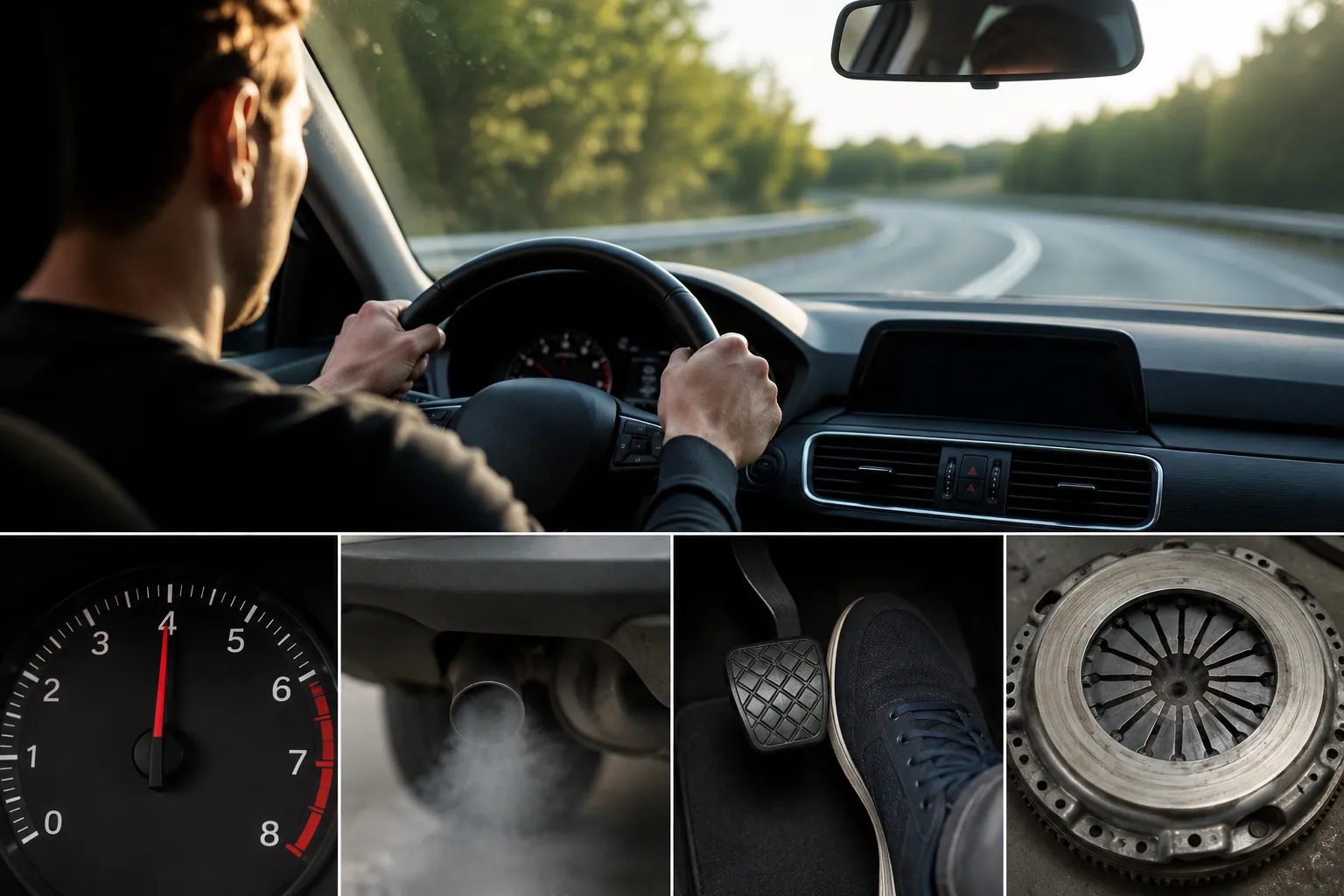
How do I know my clutch is slipping? The clearest sign is that your engine revs rise but your car does not speed up the way it should, especially when you accelerate hard, drive in a higher gear, go uphill, or carry extra load. A burning smell, poor acceleration, a spongy or sticky clutch pedal, and difficulty changing gears are also common clues. Current competitor guidance is very consistent on those points, with RAC, Sterling Insurance, F1 Autocentres, and BreakerLink all highlighting that same core symptom pattern.
This article will help you tell the difference between a slipping clutch, a worn clutch, and other problems that can feel similar. You will learn what a slipping clutch actually is, what it feels like while driving, how to do a few simple checks at home, what causes the problem, whether it is safe to keep driving, and when a clutch replacement is the smarter move. If you drive a manual car, this is one of the most important early warning signs to catch before it turns into a bigger gearbox, flywheel, or breakdown problem.
What a Slipping Clutch Actually Means
A clutch connects the engine to the gearbox and helps transfer power to the wheels. When the clutch is healthy, it grips properly. When the clutch is slipping, it does not fully engage, so some of that power is lost before it reaches the road. That is why the RPM climbs but the car does not respond with matching speed. RAC and RAC’s clutch explainer both describe clutch slipping as a failure to fully engage, which causes a loss of power and can damage parts inside the clutch system over time.
In simple terms, the clutch works through friction between key parts such as the clutch plate, pressure plate, and flywheel. If those surfaces are too worn, overheated, glazed, or contaminated, they cannot grip properly. Instead of locking engine power to road speed, they let the engine spin ahead. That is why many drivers first notice the issue when trying to overtake, climb a hill, or accelerate in 4th gear or 5th gear.
Top Signs Your Clutch Is Slipping
The biggest giveaway is still rising revs but no acceleration. You press the throttle, the rev counter shoots up, but the car barely picks up speed. Sterling Insurance explicitly calls this the number one sign of a slipping clutch, while RAC and RAC’s repair page describe it as revs increasing but speed not matching.
Another common sign is a burning smell. Many drivers describe it as burning rubber, a hot, sharp smell after hill starts, stop-start traffic, or any situation where the clutch has been working hard. Sterling and BreakerLink both highlight this as a classic symptom, especially when extra heat builds up under load.
You may also notice poor acceleration even though the engine sounds busy. F1 Autocentres says a slipping clutch often shows up as poor acceleration while the engine continues to rev, and their clutch guide repeats that drivers may feel a momentary loss of acceleration. That “disconnected” feeling between the accelerator pedal and the car’s response is one of the easiest symptoms to recognize once it starts happening regularly.
Gear changes can start to feel wrong too. RAC lists difficulty shifting gears as a common symptom, and F1 Autocentres says you may find it harder to change gears or hear grinding, squeaky, or grumbling noises when using the clutch. Some drivers also feel judders, jerks, or stutters as they move off or shift up.
Pedal feel matters as well. A slipping clutch can come with a pedal that feels spongy, loose, sticky, or strangely high at the bite point. F1 highlights a pedal that feels sticky, vibrates, or seems spongey or loose, while BreakerLink adds that a spongy, sticking, or high clutch pedal is one of the main warning signs.
Here is a quick symptom map:
| Symptom | What it often feels like | Why it matters |
|---|---|---|
| High RPM but low speed | Engine races, car does not pull | Most classic sign of clutch slipping |
| Burning smell | Hot, burnt friction smell after traffic or hills | Suggests heat and friction buildup |
| Poor acceleration | Car feels weak under throttle | Power is not transferring properly |
| Hard or awkward shifts | Gears feel stiff, grind, or hesitate | Clutch may not be engaging or releasing cleanly |
| Spongy or sticky pedal | Pedal feel changes, bite point feels odd | Can point to clutch wear or hydraulic issues |
| Noise | Squeak, grumble, grinding | May involve clutch wear or related parts |
These symptoms do not always appear all at once. Sometimes the problem starts small and only shows under heavier load. That is why many people miss the early signs until the issue gets worse.
What a Slipping Clutch Feels Like While Driving
A slipping clutch usually feels worst when the car is working harder. For example, you may press the accelerator to merge into traffic, the engine note rises quickly, but the car does not surge forward the way it used to. The same thing often happens uphill, when overtaking, or in higher gears where the clutch has to hold stronger load. Sterling specifically notes that slipping may become more obvious on steep roads or when pulling extra weight, and BreakerLink says drivers often notice it under load, including accelerating uphill, overtaking, or carrying passengers.
It can also feel inconsistent. The car may seem almost normal in lower gears or light city driving, then suddenly feel weak in 5th gear on the highway. That is one reason searchers often ask about clutch slipping in high gear or clutch slipping uphill. In day-to-day language, it feels like the car is “thinking about accelerating” rather than actually doing it.
Easy At-Home Tests to Check for Clutch Slip
You can do a basic check at home, but do it carefully and do not keep repeating it if the car already shows clear symptoms.
One common test is the handbrake test. Sterling advises applying the handbrake, selecting a higher gear, and then trying to move off gently. A healthy clutch should usually stall the engine. If the engine keeps running too easily, that can suggest the clutch is slipping.
Another simple clue is the higher-gear road test. While driving normally in a safe place, pay attention to what happens in 3rd, 4th, or 5th gear when you accelerate. If the RPM needle rises quickly but road speed does not follow, that strongly points toward clutch slip. Multiple sources describe this exact symptom pattern.
A few tips help keep that check safe:
- Test in a safe area with light traffic.
- Avoid hard launches or repeated abuse.
- Stop testing if you notice a strong burning smell.
- If the pedal feels very odd or the car struggles to stay in gear, move straight to a professional inspection.
These checks are useful for confirmation, but they are not a substitute for diagnosis. A hydraulic clutch issue, low clutch fluid, or a release bearing problem can create overlapping symptoms.
What Causes a Clutch to Slip?
The most common cause is simple wear and tear. Over time, the friction material on the clutch wears down and loses grip. F1’s guidance notes that clutch problems can come from wear over time, and RAC’s clutch explainer also frames clutch problems as a common result of long-term use.
Driving style matters too. Frequent stop-start traffic, repeated hill starts, riding the clutch, heavy towing, and aggressive launches can all shorten clutch life. Sterling points to hill starts, stop-start traffic, steep roads, and extra weight as situations where slipping becomes more obvious, which also makes them useful clues about what stresses the system.
Another cause is oil contamination. If oil leaks onto the clutch from a seal problem, the clutch may start slipping even if it is not fully worn out. BreakerLink also points to causes such as issues with clutch-related components and contamination that affect how the friction surfaces grip.
A worn or damaged pressure plate, flywheel, or related clutch hardware can also be involved. In some cases, what feels like slipping comes from clutch adjustment or a hydraulic fault rather than the friction disc alone. That is why the best repair is not always “replace everything immediately.” Diagnosis matters.
Clutch Slipping vs Transmission Slipping
This is one of the most important distinctions, because people often confuse the two.
With a slipping clutch, the classic clue is high revs without matching speed, often paired with clutch pedal changes, shifting difficulty, or a friction smell. With gearbox or transmission problems, the pattern can be different. F1’s gearbox-vs-clutch guide says slipping gears can be linked to a faulty gearbox, lack of transmission fluid, or a damaged shift fork, and it notes that gearbox faults may also come with a whining noise.
So, a practical rule is this: if the problem seems closely tied to the clutch pedal, bite point, friction smell, and rev flare under load, think clutch first. If the issue feels more like the car is dropping gears, slipping gears, or making transmission-type noises regardless of clutch use, the gearbox deserves attention too. When the symptoms are mixed, a mechanic should inspect the car before you assume it only needs a clutch.
Problems That Can Mimic a Slipping Clutch
Not every weak-feeling clutch is actually worn out. A failing clutch master cylinder or clutch slave cylinder can change pedal feel, shift quality, and the bite point. BreakerLink’s clutch master cylinder guide links low or dark clutch fluid, difficulty changing gears, a low or spongy clutch pedal, a hard or sticky clutch pedal, and a changed bite point to hydraulic trouble.
That matters because low fluid or hydraulic issues can make the clutch feel wrong even if the friction surfaces are not the only problem. Likewise, a noisy release bearing or related hardware can create noises that drivers associate with a dying clutch. If you have pedal feel problems, odd engagement, or gear-change trouble without the classic rev flare, there is a good chance the diagnosis is more complicated than “the clutch is slipping.”
Can You Drive With a Slipping Clutch?
Sometimes you can drive a short distance with a slipping clutch, but that does not mean it is a good idea. RAC, Sterling, and BreakerLink all treat a slipping clutch as something that can worsen, increase damage risk, and leave you needing repair sooner rather than later. BreakerLink also warns that slipping can be dangerous because it can cause the car to lose power while accelerating, which raises safety concerns on the road.
A good rule is this: if the car still moves normally enough to reach a nearby shop, drive gently, avoid hills, avoid towing, and avoid aggressive acceleration. But if the clutch smell is strong, the car barely accelerates, the gears grind badly, or the problem is getting worse quickly, stop driving and arrange help. Continuing to drive on a badly slipping clutch can damage related parts such as the flywheel and increase the final repair bill.
When a Slipping Clutch Needs Repair vs Full Replacement
A slipping clutch does not always mean the same fix. If the root cause is low clutch fluid, a hydraulic leak, or another linked part, the answer may be a focused repair. But if the clutch friction material is worn, heat-damaged, or contaminated, a full clutch replacement is often the correct solution. BreakerLink’s article moves from symptoms to what causes clutch slipping, how it can be fixed, and when it is time to book a replacement clutch, which reflects how often diagnosis leads to replacement when the problem is genuine wear.
This is also where a shop may recommend checking the flywheel at the same time. If the clutch has been slipping for a while, the flywheel surface may no longer be in great shape. That is why replacement quotes can vary so much between cars and repair shops.
How Much Does It Cost to Fix a Slipping Clutch?
There is no single universal number, but the current competitor pages consistently frame clutch work as a labor-heavy repair where cost depends on the car, the parts, and whether related items like the flywheel also need work. RAC discusses how much it costs to replace a clutch and notes that the bill can vary by make and model, while BreakerLink highlights replacement clutch cost as a major driver concern.
A realistic way to think about cost is:
| Cost factor | Why it changes the bill |
|---|---|
| Car make and model | Some cars are simply harder to work on |
| Labor time | Clutch jobs often take several hours |
| Parts replaced | Clutch kit only vs clutch plus flywheel or seals |
| Condition of related parts | Damage or contamination can increase costs |
If you are comparing quotes, ask what is included. A cheap quote may not include everything, while a better one may account for the clutch kit, labor, and any related parts that should be done at the same time.
What Shortens Clutch Life and How to Make It Last Longer
A clutch usually wears out faster when the driver spends a lot of time riding the clutch, resting a foot on the pedal, doing lots of hill starts, towing heavy loads, or spending every day in stop-start traffic. Competitor content repeatedly links those conditions with obvious clutch stress and slipping symptoms.
To help a clutch last longer:
- Use the clutch smoothly, not as a footrest.
- Avoid holding the car on a hill with clutch slip; use the handbrake properly instead.
- Do not dump power into the clutch during launches.
- Pay attention to early warning signs like odd pedal feel, difficulty shifting, or high RPM but low speed.
Catching the issue early is important. A small clutch problem is usually cheaper and easier to deal with than a badly overheated clutch that has been slipping for weeks.
What to Do Next If You Think Your Clutch Is Slipping
If you think your clutch is slipping, start by paying attention to the big pattern: rev flare, poor acceleration, burning smell, gear-change issues, and pedal feel changes. If two or three of those are happening together, book an inspection. F1’s clutch repair page explicitly recommends a clutch check when those signs appear.
Until the car is checked, drive gently. Avoid towing, steep hills, and hard acceleration. If the car feels unsafe, use roadside help or breakdown cover instead of trying to “push through it.” That is especially true if the issue has started affecting your ability to merge safely or move away cleanly.
Practical takeaway: If your revs rise but speed does not, especially in a higher gear or uphill, and you also notice a burning smell or pedal feel change, there is a strong chance your clutch is slipping.
FAQ
Can a slipping clutch fix itself?
Usually, no. If the clutch is slipping because of wear, it will not heal on its own. If the root cause is hydraulic or adjustment-related, the underlying issue still needs repair.
Will a slipping clutch always smell burnt?
Not always. A burning smell is common, especially after traffic or hills, but some drivers first notice high RPM but low speed before they smell anything.
Why does my clutch slip more in 5th gear or uphill?
Because the clutch is under more load in those situations. Sterling and BreakerLink both note that slipping often becomes more obvious on steep roads, under extra weight, or during harder acceleration.
Can low clutch fluid cause similar symptoms?
Yes. BreakerLink’s master cylinder guide connects low clutch fluid, a changed bite point, and gear-change problems with clutch hydraulic faults.
Is it dangerous to keep driving?
It can be. A slipping clutch can reduce your ability to accelerate properly, and BreakerLink warns that this can increase your risk on the road.
Final Words
If you are asking “how do I know my clutch is slipping?”, the most reliable answer is this: your engine revs climb, but your car does not accelerate in proportion, often with a burning smell, poor performance, gear-change trouble, or a spongy / sticky clutch pedal. Those are the signs repeated most consistently across the leading pages on this topic
Disclaimer: This article is for general informational and automotive education purposes only. Clutch slipping symptoms, repair costs, and driving safety can vary depending on the vehicle make, model, transmission type, driving conditions, maintenance history, and related mechanical issues. If you notice persistent slipping, burning smells, gear-change problems, or loss of acceleration, have the vehicle inspected by a qualified mechanic or transmission specialist promptly.