
 By adnanshabbir942@gmail.com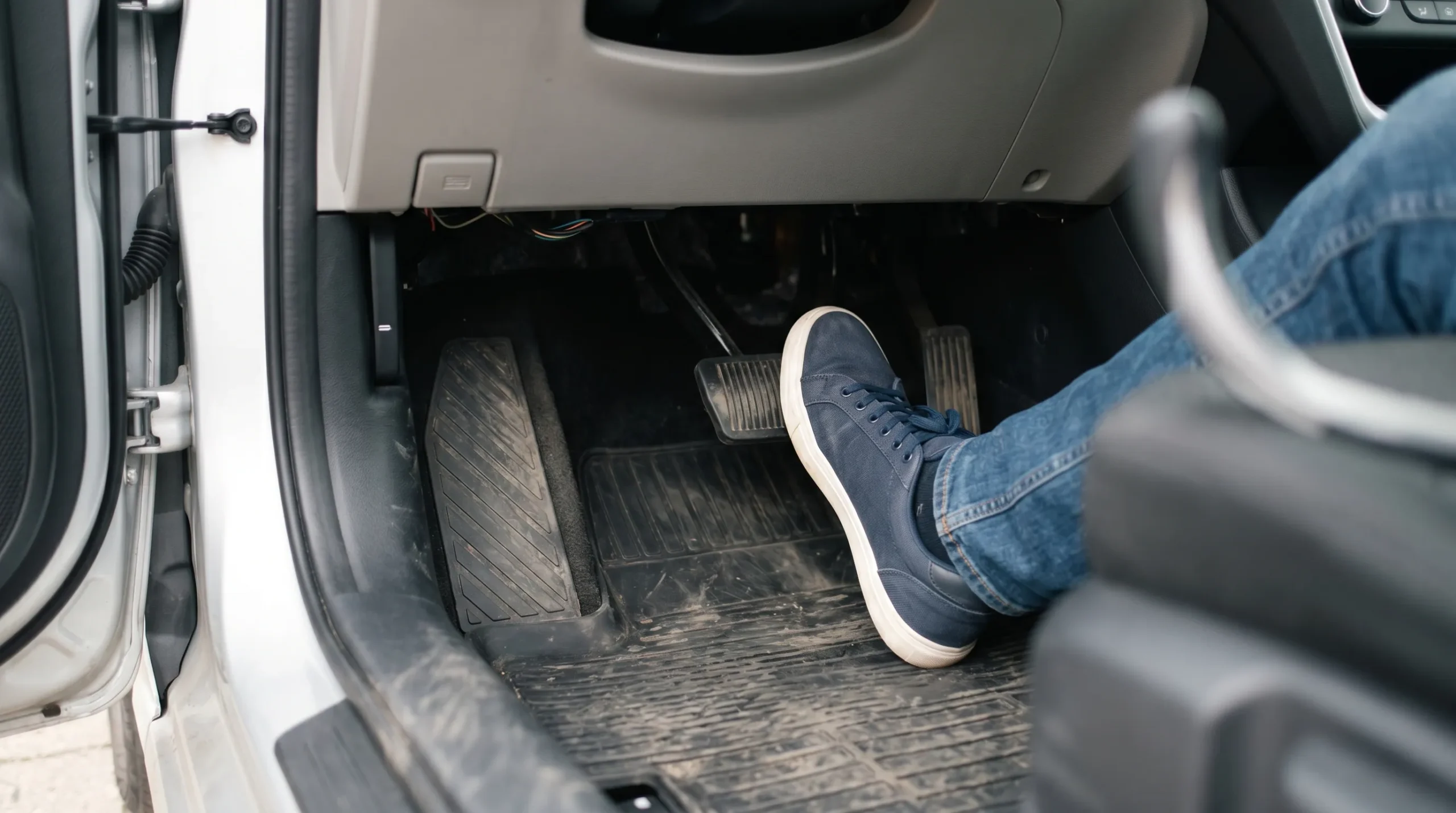
Which pedal is the brake is one of the first questions almost every new driver asks, and the answer is simple once you know how cars are laid out. In most vehicles, the brake pedal sits to the left of the accelerator pedal. In an automatic transmission car, that means there are usually two pedals: brake on the left and gas pedal or accelerator pedal on the right. In a manual transmission car, there are three pedals: clutch on the far left, brake pedal in the middle, and accelerator on the far right. Beginner driving resources and training guides describe the layout this same way, even though the wording may vary.
For many people, the real confusion is not just which is the brake pedal, but also which foot to use, how to avoid pressing the wrong pedal, and what changes between automatic cars and manual cars. That is why this guide does more than answer the basic question. It also explains brake pedal positions, the difference between the brake pedal vs gas pedal, how the brake works, what mistakes new drivers make, and what special cases you should know about, including ABS, the parking brake, and one-pedal driving in some electric vehicles.
If you are learning to drive, studying for a test, or simply trying to feel more confident in an unfamiliar car, this article will help you understand the car controls for beginners in a clear, practical way.
Which Pedal Is the Brake in an Automatic Car?
In an automatic vehicle, the setup is usually very straightforward. You will typically see two pedals in the driver’s footwell. The left pedal is the brake, and the right pedal is the accelerator. That is the standard layout most new drivers learn first, and it is why many people searching which pedal is the brake in an automatic car just need quick reassurance before they get behind the wheel.
The brake pedal in an automatic car is often a little wider than the accelerator. It may also have a more noticeable textured surface or grooves for grip. The accelerator pedal is usually narrower and designed for smoother, lighter pressure. These visual and tactile differences help drivers distinguish the pedals quickly, especially in low-light conditions or when they are driving a new automatic vehicle for the first time. This is one reason the answer to how to identify the brake pedal in an automatic vehicle is not only about left and right position. It is also about shape, feel, and pedal size.
In normal driving, your right foot handles both the brake pedal and the gas pedal. You do not use one foot for each pedal in a standard automatic. Instead, you keep your heel planted lightly and pivot your right foot between the two as needed. This improves proper foot positioning, reduces confusion, and helps build the muscle memory needed for safe stopping and smooth acceleration. Driver education sources consistently teach this because it lowers the chance of pedal error in everyday traffic.
So, if you ever forget, remember the simplest version: in an automatic, the left one is the brake and the right one is the accelerator.
Which Pedal Is the Brake in a Manual Car?
A manual transmission changes the layout because it adds a third pedal. In that setup, the clutch pedal is on the far left, the brake pedal is the middle pedal, and the accelerator is on the far right. That means if you are asking for manual transmissions it’s the middle pedal?, the answer is yes. The brake is placed in the center between the clutch and the accelerator.
This is where many beginners get mixed up. Someone may learn that the brake is on the left in an automatic, then sit in a manual and suddenly see a pedal even farther left. That far-left pedal is not the brake. It is the clutch, which is used for gear changes. The brake pedal positions are still logical, but the extra control changes the way you think about the foot area.
A simple memory trick is this:
| Transmission type | Left pedal | Middle pedal | Right pedal |
| Automatic | Brake | — | Accelerator |
| Manual | Clutch | Brake | Accelerator |
That comparison table alone answers a huge part of the search intent behind which pedal is the brake, where is the brake pedal, and which pedal is the accelerator.
In a manual car, your left foot is reserved for the clutch pedal, while your right foot handles both braking and acceleration. That pattern matters because it keeps the driver’s footwork consistent. Even though manuals require more coordination, the basic rule stays clean: left foot for clutch, right foot for brake and gas.
Brake Pedal vs Gas Pedal: How to Tell the Difference Quickly
The difference between the brake pedal vs gas pedal sounds obvious after some practice, but at the beginner stage, it matters a lot. The two main clues are position and feel.
First, the brake pedal is to the left of the accelerator in both automatic and manual layouts. In a manual, it becomes the middle pedal because of the clutch. Second, the brake is usually larger, often with a broader pedal pad and more visible grip texture. The gas pedal is usually narrower. This makes sense because the brake is used for firm, controlled stopping, while the accelerator is meant for fine speed adjustments.
There is also a difference in pressure and travel. When you press the accelerator pedal, the response is usually lighter and more sensitive. When you press the brake pedal, you expect more resistance and a different kind of feedback. DriversEd explains that even the feel can vary between standard brakes and power brakes, which is why one car may seem more responsive than another.
That is why a beginner should never rely on speed alone. Before moving the car, take a moment to look down and confirm pedal placement. Feel where your right foot rests. Notice the width of the brake. Those few seconds can prevent one of the most stressful mistakes for any learner: pressing the wrong pedal.
A helpful way to think of it is this:
- The brake pedal is for control and stopping power
- The gas pedal is for speed and forward motion
- The clutch pedal, if present, is for gear shifting
This may sound basic, but reinforcing these differences is what builds confidence. When people search which pedal is the gas pedal or how can I tell which pedal is the brake in a car, they are often really asking how to reduce uncertainty before their first drive.
Which Foot Should You Use for the Brake?
For most drivers, the safest beginner rule is easy: use your right foot for both the brake pedal and the accelerator pedal. This applies to automatic cars, and it still applies in manual cars, where the left foot is reserved only for the clutch.
Some people hear about left-foot braking and wonder whether they should try it. That technique does exist, but it is usually discussed in auto racing, rallying, or specialized performance driving contexts rather than standard beginner road driving. Wikipedia’s overview of left-foot braking describes it as a driving technique used in motorsport and certain advanced control situations, not the normal everyday method recommended to new drivers on public roads.
Why is right-foot use so widely recommended for beginners? Because it lowers confusion. If the same foot handles both braking and acceleration, your body learns one clean movement pattern. That reduces the risk of hovering over two pedals at once or applying both unintentionally. Some official driving-test guidance also warns against depressing the brake and accelerator together, which shows how important correct foot use is in real-world evaluation.
So if you are asking which foot should you use for the brake, the practical beginner answer is:
Use your right foot for the brake and gas. Use your left foot only for the clutch in a manual.
How the Brake Pedal Works and Why It Matters for Safety
The brake pedal is the most important pedal in the car when it comes to safety. Pressing it slows the vehicle and can bring it to a full stop. But what actually happens when you push it?
In simple terms, when you press the pedal, the car sends force through the brake system, often using hydraulic pressure. That pressure moves brake fluid through lines or hoses so the braking parts at the wheels can create friction. In many vehicles, that means brake pads pressing against brake rotors. In others, especially some older setups, brake shoes push against drums. AutoZone explains this beginner-friendly process clearly and connects it to how the car loses speed in a controlled way.
You do not need to memorize every component like calipers, wheel cylinders, or the master cylinder to become a safe driver. What matters is understanding that the brake is not just another pedal. It is the control that protects you, your passengers, and everyone else on the road.
That is also why smooth braking matters so much. Good braking is not about stomping hard every time. It is about applying the right amount of pressure at the right moment. That improves reaction time, makes the ride more comfortable, and helps avoid sudden traffic situations turning into dangerous ones. On a test or in normal driving, smooth and controlled use of the brake says a lot about a driver’s confidence.
Common Beginner Mistakes When Using the Brake Pedal
New drivers make predictable mistakes, and most of them come from tension rather than lack of intelligence. One common mistake is pressing the wrong pedal. This can happen when a learner panics, drives an unfamiliar car, or has not built enough muscle memory yet. That is why so many beginner resources emphasize looking at the driver’s footwell, understanding the layout, and practicing in a calm environment first.
Another mistake is riding the brake pedal. This means resting your foot on the brake lightly when you do not actually need to slow down. It can create unnecessary wear, confuse drivers behind you, and make your driving less smooth. Melody Ford’s article specifically highlights this as a beginner issue, along with abrupt braking and poor foot positioning.
A third issue is waiting too long to move your foot from the accelerator to the brake. Good driving is not only about reacting quickly. It is also about anticipating. If you see a red light, pedestrian crossing, or slowing traffic ahead, you should already be preparing mentally for braking. This is part of defensive driving and helps create safer stopping distances.
A practical tip is to practice a simple routine: accelerate gently, release the gas early, and then apply the brake with steady pressure. This teaches you gradual braking instead of sudden stops. Over time, the movement becomes natural.
How to Practice Safely as a New Driver
The best place to learn pedal control is not busy traffic. It is a controlled environment where you can focus without pressure. A wide empty parking lot is ideal. Some learners also benefit from a very quiet residential area, but only when they already understand the basic layout and have supervision from a qualified instructor or experienced driver. Melody Ford recommends exactly this type of low-stress practice for new drivers.
Start by sitting in the parked car and identifying the pedals before turning anything on. Say it out loud if you need to: brake left, gas right. In a manual: clutch left, brake middle, gas right. Then practice moving your right foot between brake and accelerator without looking down for too long. You want familiarity, not distraction.
Once you begin rolling, keep the exercise simple. Move slowly, stop smoothly, and repeat. Do not try to master everything in one session. A few minutes of clean repetition builds more confidence than rushing into complex situations too early.
A short beginner case example makes the point. Imagine a learner who gets into an unfamiliar automatic and feels nervous. Instead of driving away immediately, they take thirty seconds to confirm the pedal placement, notice that the brake is larger and wider, and rehearse the right-foot movement pattern. That tiny pause can be the difference between calm control and panic.
Brake Pedal Problems: What Feels Normal and What Does Not
Not every brake issue is a driving mistake. Sometimes the pedal itself gives a warning sign. AutoZone notes several examples, including a spongy brake pedal, a worn brake pedal pad, vibration during braking, or even something as simple as a floor mat interfering with pedal movement.
A normal brake pedal feel should be predictable. It should not sink strangely, feel unusually soft, or require extreme force without explanation. If the brake pedal feels soft, that can point to problems in the braking system. If it feels extremely hard, that can also signal something is wrong. A driver does not need to diagnose the full system alone, but they should know when a pedal feels abnormal.
This is also where maintenance matters. AutoZone recommends having brakes checked at least twice a year, which is one of the few clear numeric maintenance cues found in the competitor set. That advice supports the broader point that even basic pedal questions connect to real vehicle safety.
If your brake warning light appears, the pedal suddenly changes feel, or the car does not stop the way it normally does, that is not something to ignore. The brake pedal is the wrong place to “wait and see.”
Parking Brake, ABS, and One-Pedal Driving in EVs
This is where many competitor articles leave gaps, so covering it makes your content stronger.
First, the parking brake is not the same as the brake pedal. The brake pedal is your main service brake used during driving. The parking brake is meant to help keep the vehicle from rolling when parked. In many newer cars, the parking brake may be electronic rather than a hand lever, but its purpose is still different.
Second, ABS, or anti-lock braking system, helps prevent the wheels from locking during hard braking. Beginners sometimes expect the brake pedal to feel exactly the same in all situations, but during strong braking with ABS involved, the feedback can feel different. That does not mean the pedal is broken.
Third, one-pedal driving in some electric vehicles and hybrids can confuse new readers. With regenerative braking, lifting off the accelerator may slow the vehicle more aggressively than in a gasoline car. But that does not mean the brake pedal disappears. The brake pedal still exists and still matters. One-pedal systems simply change how the car decelerates in many everyday situations.
Adding this modern context gives your article an edge because it answers questions current searchers may not know how to phrase yet.
Do Different Cars Feel Different? Yes — but the Layout Stays Familiar
One reason people feel unsure is that not every pedal feels exactly the same. A brake in one vehicle may seem softer, firmer, higher, or lower than in another. Some modern automobiles also have slightly different pedal sizes, pedal travel, or sensitivity. Melody Ford points out that adapting to different automatic models is part of becoming comfortable as a driver.
The good news is that the layout itself stays familiar. In standard vehicles, the brake pedal positions do not randomly swap. The accelerator remains on the right, and the brake remains to its left. In manuals, the clutch remains the far-left pedal. So even when the feel changes, the basic logic does not.
That is why, before driving any unfamiliar vehicle, it is smart to pause, look, and confirm. Confidence comes from checking, not guessing.
FAQs About the Brake Pedal
Which pedal is the brake and which is the gas?
In most cars, the brake pedal is on the left and the gas pedal is on the right. In a manual, the brake becomes the middle pedal because the clutch is on the far left.
Is the brake pedal always on the left?
In an automatic, yes, it is the left pedal. In a manual, it is still left of the accelerator, but it is the middle pedal because of the clutch.
Do automatic cars have a clutch?
Most standard automatic cars do not have a clutch pedal for the driver to operate. That is one reason they usually have two pedals instead of three.
Which foot should I use for the brake?
Use your right foot for the brake in an automatic. In a manual, use your right foot for brake and gas, and your left foot only for the clutch.
Can I brake with my left foot?
It is possible, and there is even a technique called left-foot braking, but it is generally not the standard beginner approach for regular road driving.
What should I do if I press the wrong pedal?
Stay calm, release the pedal you pressed by mistake, move your right foot to the brake, and stop the vehicle safely if possible. Practicing in a controlled environment can reduce the chance of this happening in the first place.
Final Thoughts
The answer to which pedal is the brake is simple, but learning it well matters. In an automatic transmission car, the brake pedal is on the left and the accelerator pedal is on the right. In a manual transmission car, the brake is the middle pedal, with the clutch on the far left and the accelerator on the far right.
Once you understand that layout, the next step is confidence. Learn the difference between the brake pedal vs gas pedal, use your right foot correctly, practice in a safe setting, and pay attention to how the pedal feels. That combination of knowledge and calm repetition is what turns a confusing beginner question into a skill you stop thinking about altogether.
Disclaimer:
This article is for general informational and beginner driving guidance purposes only. Vehicle controls, pedal feel, braking response, and driving procedures may vary by car model, transmission type, driving conditions, and local road rules. New drivers should always learn in a safe environment and follow guidance from a qualified driving instructor or licensed professional.