
 By adnanshabbir942@gmail.com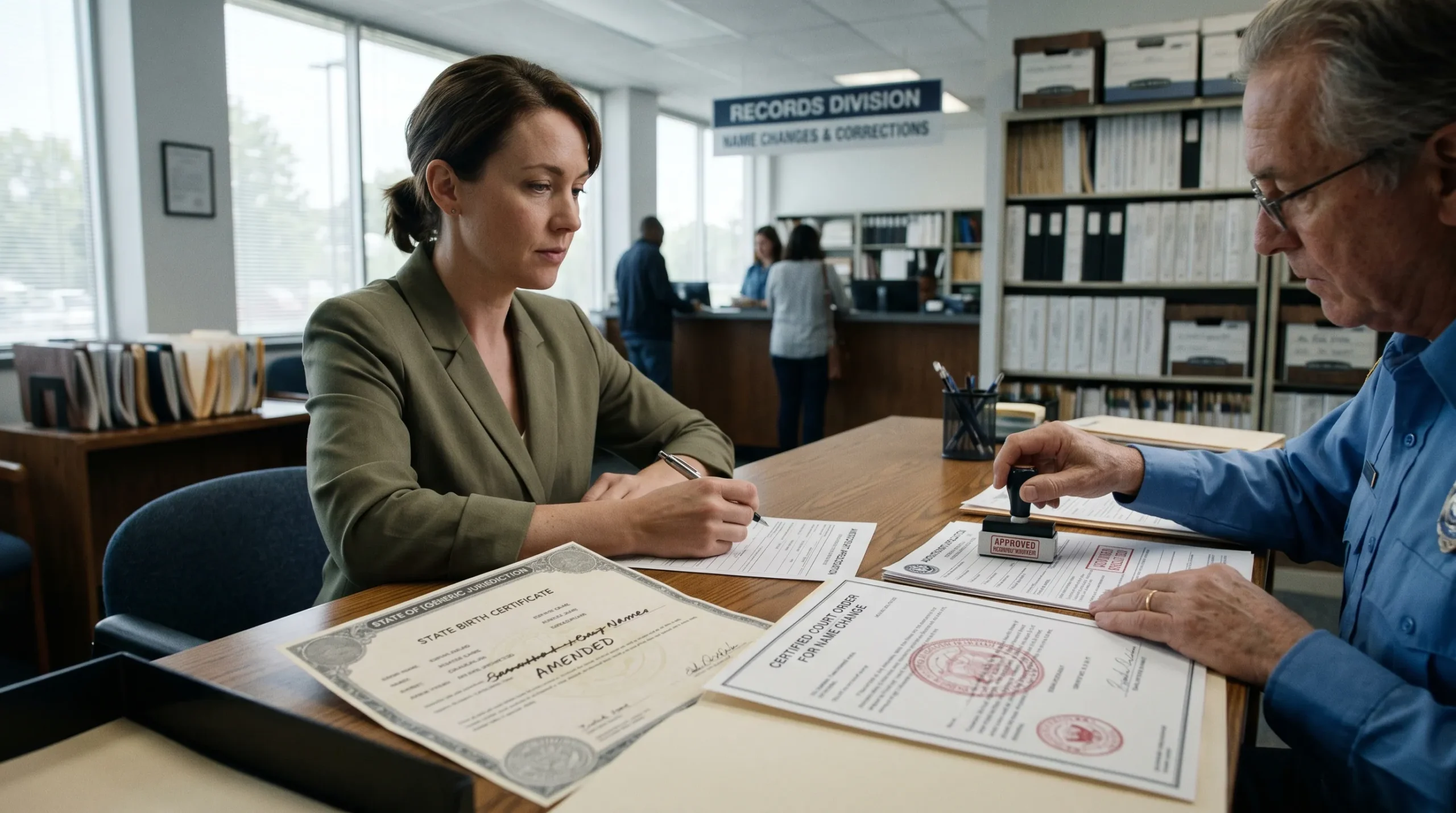
Yes, in many cases, a name on a birth certificate can be corrected, amended, or updated, but the exact process depends on why the name needs to be changed, how major the change is, and which state or jurisdiction issued the record. A simple birth certificate spelling correction is often treated differently from a full legal name change for birth certificate purposes, and some cases can be handled through a Vital Records office, while others require a court order for birth certificate name change.
That distinction matters more than most people realize. If the problem is a misspelled name on birth certificate, a missing name, or a small clerical mistake, the process may be more straightforward. But if you want to replace one name with another, change a surname later in life, or fix a mismatch that affects a passport, Social Security record, or other official documents, the rules can become more formal. The best approach is to understand whether you are asking for a birth certificate name correction, a birth certificate amendment, or a legal change backed by a judge’s order.
In this guide, you will learn when you can change the name on a birth certificate, when a court order is required, what documents are needed, how long it may take, and what records to update afterward. The goal is not just to answer the question, but to help you avoid delays, rejections, and document mismatches.
First, Understand the Difference Between a Correction and a Legal Name Change
The most important thing to know is that not every name issue is treated the same way. Many authorities separate a clerical correction from a legal name change. A correction usually means fixing a typo, a misspelling, a data-entry mistake, or a missing part of a name that should have appeared on the original record. A legal change usually means changing the name from one identity to another, especially after the record has been established for some time. Maryland’s guidance and similar state-level explanations clearly show that agencies do not process all requests the same way, and timing can affect whether a court hearing or formal petition is needed.
For example, if the certificate shows “Jon” instead of “John,” that may be handled as a birth certificate clerical correction if you can prove the intended spelling with supporting documents like a hospital record, school record, or government-issued ID. But if someone wants to replace the original first name entirely, add a new surname long after registration, or align the birth record with a later identity used across school, tax, and employment records, the request may be treated as a legal amendment rather than a simple fix. That is why many people asking “can a birth certificate be amended” are really dealing with two separate legal questions: is there an error, or has the person’s legal identity changed?
This distinction also affects fees, processing time, accepted evidence, and where you file. A small correction might stay within the Division of Vital Records or a similar registrar office. A major change may require a name change petition, judge approval, and a certified copy of court order before the record office will act.
When You Can Change a Name on a Birth Certificate?
In practical terms, a name can often be changed or corrected on a birth certificate in a few common situations. One is when there is a misspelled first or last name. Another is when part of the name was left blank or recorded incorrectly at birth. A third is when there has already been a legal name change, and the person wants the birth record to reflect it. Some states also allow changes involving a child’s name, surname change, or parent information, but the proof requirements vary.
A useful way to think about it is by category. If the request is based on a mistake, such as a typo, inconsistent spelling, or missing middle name, it may fall into the correction pathway. If the request is based on a later legal event, such as a judge-approved change, then the record office may ask for the legal documentation of name change first. If the request affects family identity issues, such as adding or correcting a parent’s name, extra evidence like a paternity affidavit, marriage records, or court findings may be required.
Some guidance also uses timing rules. Maryland, for example, distinguishes changes made within 12 months of birth from those made after 12 months of birth, and that timing affects what documentation is accepted and whether a court order becomes necessary. That kind of rule is a reminder that birth certificate name correction by state is real: what works in one state may not work in another.
When a Court Order Is Usually Required?
A court order for birth certificate name change is more likely to be required when the requested change is substantial rather than clerical. If the person is not simply fixing a typo but is replacing the original name with a different legal identity, many jurisdictions want a judge to approve that change first. The same is often true when the person is older, when the record has existed for years, or when the original birth entry is being challenged rather than corrected. The Maryland and US Birth Certificates guidance both indicate that after a certain point, or in more substantial cases, the matter moves beyond a routine registrar correction.
That is why a lot of people search “can a birth certificate be corrected without going to court” or “when do you need a court order for birth certificate correction.” The answer is that minor corrections may not need court involvement, but more serious changes often do. JustAnswer’s legal explanation also frames the process around filing a petition, attending a court hearing, and then presenting the resulting certified order to the Vital Records Office.
If court action is required, the process can include a filing fee, paperwork in county court or state court, a hearing date, and the need to request certified copies afterward. In many places, the judge’s order is what unlocks the amendment process at the record office. That is why people should not assume that a notarized affidavit alone will always be enough for a major name change.
How to Change the Name on a Birth Certificate?: Step by Step
If you are wondering how to change the name on a birth certificate, the process usually starts with identifying the type of request. Step 1 is to decide whether it is a clerical correction, a missing-name addition, or a full legal name change. That decision shapes everything that follows. A wrong spelling, missing letter, or clear data-entry error will usually be processed differently from a later identity change.
Step 2 is to contact the Vital Records office in the place of birth. This is critical because the birth jurisdiction controls the record. Even if you now live elsewhere, the state or district that issued the certificate usually sets the amendment rules. Some offices publish instructions online, while others require mailed or in-person applications.
Step 3 is to gather supporting documents. This is where many applications succeed or fail. Depending on the request, the office may ask for an original birth certificate, photo ID, proof of identity, school records, hospital records, a marriage license, Social Security record, or sworn statements. If the request involves a legal name change, you may need a certified court order.
Step 4 is to complete the amendment or correction form and submit any fee. If the office tells you the change is beyond a routine correction, Step 5 becomes filing a name change petition in court or presenting the court order you already have. Only after that order is recognized can the registrar issue an amended birth certificate or updated certified copy.
Step 6 is to request multiple certified copies once the update is approved. This matters because one corrected record often triggers changes in other systems, including passport name change, driver’s license, employment files, or SSA records. Keeping extra copies saves time later.
Here is a simple table that sums up the path:
| Situation | Typical route | Common proof |
|---|---|---|
| Misspelled name on birth certificate | Registrar correction | Hospital record, school record, ID, sworn statement |
| Missing first or middle name | Amendment request | Birth evidence, family records, supporting documents |
| Full legal name change | Often court first | Certified court order, photo ID, application form |
| Parent name correction | Special amendment process | Marriage record, paternity affidavit, court findings |
The exact form names differ by state, but the logic stays similar.
Documents Required for Birth Certificate Name Correction
One of the most common questions is “what documents do you need to correct your birth certificate name?” The answer depends on the type of change, but most offices look for two things: proof that you are authorized to request the change and proof that the corrected information is accurate. Maryland’s guidance lists different kinds of evidence depending on the age of the person and the type of amendment, while other sources mention identity records, affidavits, and certified legal documents.
In a typical case, you may need the original birth certificate or identifying details from it, a government-issued ID or photo ID, and a completed correction form. If the case involves a typo, agencies may ask for hospital records, school records, a physician record, or another early-life document showing the intended spelling. If the issue involves a name later adopted legally, they may want a certified copy of court order, marriage certificate, or another official record.
Some offices also require notarization. That is why terms like notary public, notarized letter, and sworn statement appear so often in the competitor pages. In at least some DC amendment contexts, applicants may be asked for THREE (3) forms of identification, with specific rules for what counts. That detail shows why it is risky to assume the paperwork will be minimal.
A good checklist includes proof of identity, proof of residence if requested, supporting early records, and any legal papers tied to the change. Strong documentation reduces the chance of rejection, especially when the requested amendment affects other records like passport, Social Security card, or tax records.
Special Cases: Misspelled Name, Missing Name, Parent Name, and Surname Change
Special cases are where many people get stuck. A birth certificate spelling correction is usually the easiest situation if the error is obvious and your documents consistently show the right spelling. A missing first or middle name can also be fixable, but record offices may want evidence from close to the time of birth. Maryland’s page specifically addresses misspelled name and missing name situations, which shows these are common enough to deserve their own pathways.
A surname change is more complex because it may connect to marriage, parentage, or a later legal identity. Likewise, a request to add a parent’s name to a birth certificate or correct parent information is often treated as a separate amendment category with extra requirements. The US Birth Certificates article and the Maryland guidance both signal that family relationship changes are not handled the same way as a simple typo.
There is also the real-world issue of people who have used a name their entire life that does not exactly match the birth record. JustAnswer highlights this type of case, where the person may need to prove long-standing common usage through school records, work history, driver’s license, or employment records. That kind of paper trail can be helpful, but in many places it still does not replace the need for a formal court-approved change.
Who Can Request the Change?
Another important question is who can request a name correction on a birth certificate. In many places, an adult can request a change to their own record, while a parent or legal guardian can apply on behalf of a child. Some jurisdictions may also allow a lawyer or authorized representative to act, but they may need additional proof of authority.
This matters because record offices do not usually release or amend vital records for just anyone. They are legal identity documents, so the applicant must show both identity and standing. If the record belongs to a minor, the office may ask for the parent’s ID, proof of relationship, and documents supporting the requested correction.
How Long Does It Take and How Much Does It Cost
Processing time is one of the biggest gaps in competitor content, but it is one of the biggest concerns for users. The honest answer is that there is no single national timeline. A straightforward clerical correction handled by a record office may move faster than a case that requires a court hearing, notarized statements, or extra verification. Fees can also vary because there may be an amendment fee, a certified copy fee, notarization costs, and a court filing fee if litigation is involved.
That means anyone searching “how long does it take to change the name on a birth certificate” or “how much does it cost to amend a birth certificate” should expect a local answer, not a generic one. The safest approach is to check the birth jurisdiction’s website and, if necessary, call the office directly before filing. State rules matter, and court calendars can add delay even when the paperwork itself is ready.
Can You Change the Name Online, or Do You Have to Visit an Office?
Many people now ask whether birth certificate name correction can be done online. Some offices provide online instructions, downloadable forms, or mail-based processing, but that does not mean every amendment is fully digital. Maryland’s guidance, for example, describes documentation and submission requirements that may involve mailing or delivering documents. In more serious cases, especially those involving a court order, at least part of the process may still require in-person or formal filing steps.
So, can I correct my name on my birth certificate online? Sometimes you can start the process online, but the answer depends on the state, the type of amendment, and whether original or notarized documents must be reviewed. It is best to think of online access as a convenience layer, not a guaranteed substitute for the legal process.
What to Update After the Birth Certificate Is Corrected
A corrected birth record is often only the beginning. Once the amendment is approved, you may need to update Social Security Administration records, passport, driver’s license, school files, employment files, and tax records. The Reddit discussion makes clear that people worry about whether the birth certificate itself must be amended after a legal name change, especially when applying for a passport or using a court order as supporting proof. JustAnswer goes further and lists agencies like SSA, IRS, and Medicare as records to review after the change.
This is where identity record consistency becomes essential. A mismatch between the birth certificate, passport, Social Security card, or driver’s license can create delays in applications, background checks, school enrollment, and travel documentation. In other words, a birth certificate correction for immigration, work, or school is often not just about the certificate itself. It is about the entire paper trail.
If you want one practical takeaway, it is this: after the certificate is corrected, make a list of every record that uses your name and update them in a logical order. For many people, SSA or national identity records come first, then passport and state ID, then employment and education records.
Common Problems and How to Avoid Rejection
Most rejected applications fail for predictable reasons. The first is weak evidence. If your supporting documents conflict with each other, the office may see the request as uncertain. The second is using the wrong process, such as submitting a clerical correction form for what is really a legal name change. The third is missing technical requirements like notarization, certified copies, or sufficient identification.
A simple birth certificate correction checklist can help. Make sure the name you want appears consistently across your proof documents. Confirm whether the request is a correction or a court-based amendment. Read the ID rules carefully. And never assume that a notarized affidavit alone will solve a dispute over identity if the jurisdiction expects a judge’s order.
State-by-State Rules Matter More Than Most Articles Admit
One of the biggest truths in this topic is that state-by-state rules matter. Maryland has specific guidance about timing and evidence. DC discussion threads show different ID expectations. National explainer pages repeatedly warn that procedures change by jurisdiction. So while the broad answer to “can we change the name in birth certificate” is yes, the practical answer is always yes, but under your state’s rules.
That is why a good article should never pretend there is one universal form, one universal timeline, or one universal fee. The right office may be called Division of Vital Records, Vital Statistics Administration, or something similar. The paperwork may differ. The evidence threshold may differ. And the line between a typo and a legal name change may also differ.
Final Takeaway
So, can we change the name in birth certificate? Yes, but the right path depends on whether you are fixing a clerical correction, adding a missing name, updating the record after a legal name change, or handling a more complex family or identity issue. Minor corrections may be handled through the Vital Records Office with the right supporting documents, while larger changes often require a court order, certified copies, and more formal review.
The smartest next step is to identify the type of change, gather your strongest proof, and verify the exact process with the authority in the place of birth. That is how you avoid delays, reduce the risk of rejection, and make sure your official record update supports every other document that depends on it.
Disclaimer:
This article is for general informational and educational purposes only. Birth certificate correction, amendment, name change rules, required documents, fees, and processing times may vary by state, country, jurisdiction, and individual situation. Always check with the official Vital Records office, local registrar, or a qualified legal professional before starting any birth certificate name correction or legal name change process.