
 By adnanshabbir942@gmail.com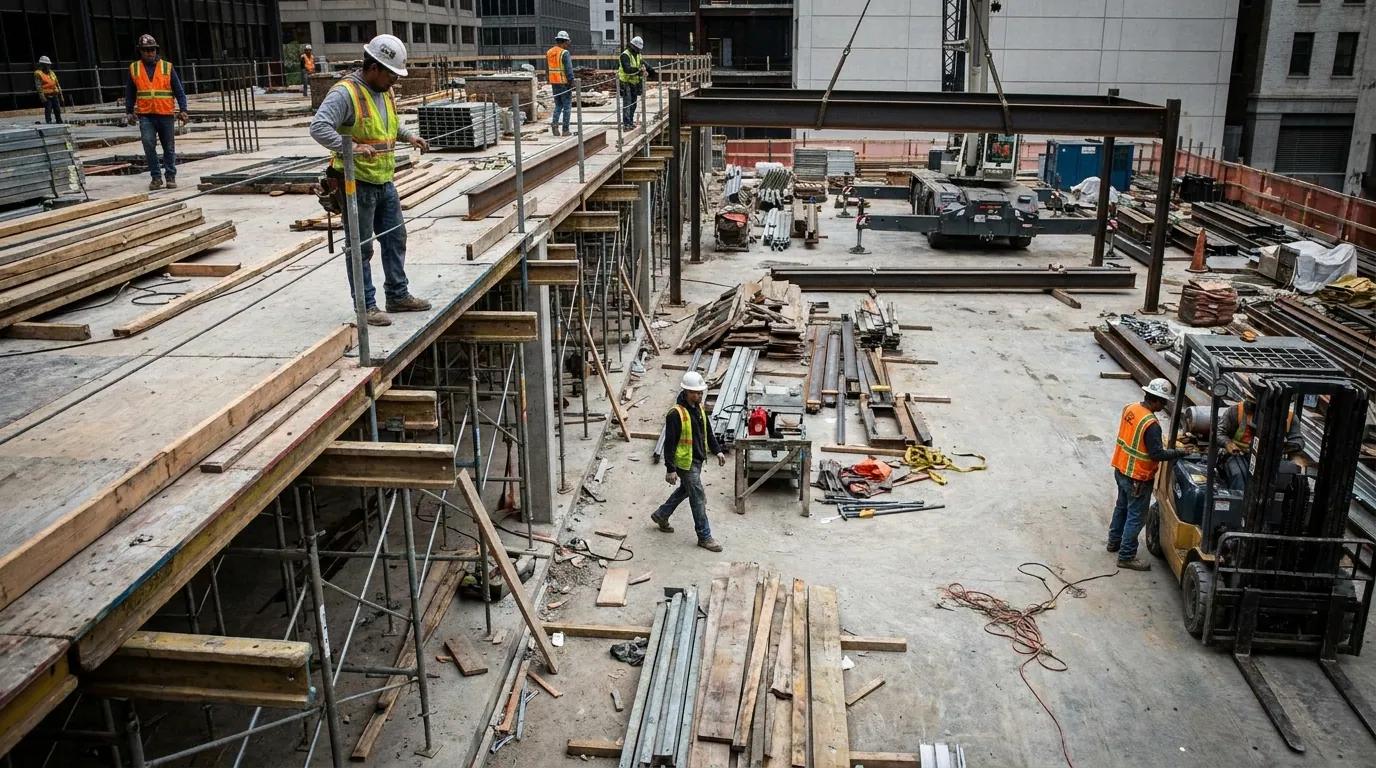
What are the common causes of accidents on construction sites? The most common causes include falls from heights, struck-by accidents, caught-in or caught-between hazards, electrocution, equipment failures, unsafe scaffolding, ladder accidents, slips and trips, hazardous materials, lack of training, poor supervision, weak hazard communication, and failure to use proper personal protective equipment.
Construction sites are naturally high-risk environments. Workers often operate around heavy machinery, elevated surfaces, power tools, live electrical systems, moving vehicles, falling materials, and changing weather conditions. Because of these risks, even one unsafe act or unsafe condition can lead to a serious injury.
According to the U.S. Bureau of Labor Statistics, 20.8% of workplace deaths in 2023 occurred in the construction industry, and 38.5% of construction deaths were due to falls, slips, and trips. That makes fall-related hazards one of the most important safety issues in construction.
Understanding the common causes of construction accidents is the first step toward preventing them.
The Most Common Causes of Accidents on Construction Sites
The most common construction site accident causes usually fall into a few major categories. Some are caused by visible hazards, such as open edges, exposed wires, or unstable scaffolding. Others are caused by poor planning, rushed work, lack of safety training, weak supervision, or failure to follow safe work procedures.
OSHA training materials commonly group the biggest construction hazards into the Focus Four hazards: falls, struck-by hazards, caught-in or caught-between hazards, and electrocution. These four categories are central to construction safety training because they are strongly connected to serious and fatal job site accidents.
| Common Accident Cause | Example on a Construction Site | Main Risk |
| Falls from height | Falling from a roof, ladder, scaffold, or floor opening | Broken bones, spinal injury, fatality |
| Struck-by incidents | Hit by falling tools, swinging loads, vehicles, or flying debris | Head trauma, fractures, crush injuries |
| Caught-in/between hazards | Trapped in machinery, trench collapse, pinned between equipment | Crushing injuries, suffocation, death |
| Electrocution | Contact with live wires, power lines, faulty cords, or energized equipment | Burns, shock, cardiac arrest |
| Equipment accidents | Forklift tip-over, crane failure, defective power tools | Severe injury or fatality |
| Slips and trips | Wet surfaces, cluttered walkways, exposed cords | Sprains, fractures, head injuries |
| Hazardous materials | Asbestos, silica dust, chemicals, fumes | Respiratory damage, burns, long-term illness |
| Poor training and supervision | Untrained workers using equipment or ignoring hazards | Preventable accidents |
These causes often overlap. For example, a worker may fall because a scaffold was poorly inspected, a guardrail was missing, and the worker was not properly trained to recognize the hazard. That is why accident prevention must address both physical hazards and root causes like poor management, weak safety culture, and inadequate planning.
Falls From Heights
Falls from heights are among the most serious and common construction accidents. They can happen when workers are on roofs, ladders, scaffolding, elevated platforms, floor openings, leading edges, or unfinished structures.
A fall may happen because of inadequate fall protection, missing guardrails, weak anchor points, unstable ladders, unsafe scaffolding, uncovered floor holes, wet surfaces, or failure to use a proper fall arrest system. Sometimes workers are given safety harnesses but are not trained on how to connect them correctly to approved anchor points.
OSHA’s 29 CFR 1926 Subpart M covers fall protection in construction and includes sections on the duty to have fall protection, fall protection system criteria, and training requirements.
Important fall prevention controls include guardrails, railings, safety nets, personal fall arrest systems, lanyards, lifelines, floor opening covers, scaffold inspections, and rescue planning after fall arrest. A harness alone is not enough if the anchor point is weak, the lanyard is too long, or no one knows how to rescue the worker quickly after a fall.
A simple example shows the risk clearly: a roofing worker walks backward while carrying materials, steps near an unprotected edge, and falls because no guardrail or fall restraint system was in place. The accident may look sudden, but the root causes were present before the worker ever stepped onto the roof.
Struck-By Accidents From Falling Objects, Vehicles, and Equipment
Struck-by accidents happen when a worker is hit by an object, vehicle, piece of equipment, swinging load, falling tool, or flying debris. OSHA defines struck-by injuries as injuries caused by forcible contact or impact between a person and an object or equipment. OSHA struck-by training examples include flying objects, falling objects, swinging objects, and rolling objects.
On a construction site, struck-by hazards can happen when tools fall from overhead work, materials are dropped from scaffolding, cranes move suspended loads, forklifts operate near pedestrians, or debris flies during cutting, grinding, or demolition.
Common causes include poor material storage, missing toe boards, lack of hard hats, weak exclusion zones, poor communication, blind spots, crane signal errors, and failure to use trained spotters. Workers can also be struck by reversing trucks, swinging crane loads, rolling equipment, or unstable stacked materials.
Preventing struck-by accidents requires more than telling workers to “be careful.” Sites need clear vehicle paths, pedestrian walkways, exclusion zones, high-visibility clothing, hard hats, hand signals, radio communication, and spotter safety procedures. When workers and equipment operators cannot see or hear each other clearly, the risk rises quickly.
Caught-In or Caught-Between Hazards
Caught-in or caught-between accidents occur when a worker is trapped, crushed, pinned, compressed, or squeezed between objects. These accidents are often severe because they involve heavy materials, moving machinery, collapsing structures, or unstable soil.
Examples include a worker caught in machinery, pinned between a vehicle and a wall, trapped under a collapsed trench, crushed by shifting materials, or pulled into unguarded equipment. These incidents often lead to crush injuries, broken bones, suffocation, internal injuries, amputations, or death.
Common causes include missing safety guards, operating equipment without safety devices, trench cave-ins, poor shoring, unsafe excavation work, failure to use trench protective systems, and lack of competent person inspection.
Trench and excavation hazards deserve special attention. Soil may look stable but collapse without warning. Protective systems such as trench boxes, shoring systems, sloping, and benching help reduce the risk. Workers should never enter an unprotected trench where cave-in hazards exist.
Caught-between accidents are also linked to poor communication. A worker may stand in a blind spot while machinery is moving, or a forklift may reverse without a spotter. These accidents are preventable when sites use proper guarding, lockout/tagout, equipment inspections, traffic control, and clear work-zone communication.
Electrocution and Electrical Hazards
Electrocution is another major cause of construction site accidents. Electrical hazards can come from live wires, faulty wiring, temporary power systems, damaged extension cords, exposed electrical components, power lines, energized equipment, and poor lockout/tagout procedures.
OSHA’s construction Focus Four training includes electrocution as one of the key construction hazard categories, along with falls, struck-by hazards, and caught-in/between hazards.
A worker may suffer electrical shock while using a damaged power tool, touching exposed wiring, working near overhead power lines, or digging into an underground utility line. These accidents can cause severe burns, cardiac arrest, nerve damage, falls after shock, or fatal injuries.
Electrical safety depends on planning and control. Workers should use GFCI protection, inspected extension cords, properly grounded equipment, lockout/tagout training, electrical panel safety, and safe clearance from overhead power lines. Before excavation, crews should identify underground utilities and follow “call before you dig” procedures where required.
Temporary power is common on construction sites, but it can become dangerous when cords are damaged, panels are exposed, or equipment is used in wet conditions. Electrical hazards should never be treated as routine because even a small contact with energized equipment can be life-threatening.
Equipment, Machinery, Crane, and Forklift Accidents
Construction sites rely on heavy machinery, cranes, forklifts, excavators, skid steers, aerial lifts, scissor lifts, boom lifts, dump trucks, compactors, concrete mixers, power tools, nail guns, jackhammers, grinders, and saws. These tools make work faster, but they also create serious accident risks when used incorrectly.
Equipment accidents often happen because of poor maintenance, defective equipment, operator error, inadequate operator training, blind spots, missing safety guards, equipment rollover, forklift tip-overs, crane signal errors, suspended load hazards, and failure to inspect machinery before use.
For example, a forklift operator may back up without seeing a pedestrian, or a crane may move a load over workers because the exclusion zone was not properly marked. A power saw may cause a serious injury if a guard is removed, or a scissor lift may tip if used on unstable ground.
The safest sites use a combination of regular equipment inspections, trained operators, preventive maintenance, spotters, clear travel paths, lockout/tagout, and equipment-specific safety procedures. Workers should never operate machinery they have not been trained to use, and supervisors should remove defective equipment from service immediately.
Unsafe Scaffolding, Ladders, Roofs, and Elevated Work Areas
Many construction accidents happen on scaffolds, ladders, roofs, and elevated platforms. These hazards connect closely to falls, but they deserve their own attention because they are so common on job sites.
Scaffolding accidents may happen because of weak planking, missing guardrails, unstable bases, poor assembly, lack of inspection, overloaded platforms, or failure to use scaffold tags. Ladder accidents may happen because ladders are too short, placed at the wrong angle, set on unstable ground, or used without maintaining three points of contact.
Roof work adds additional danger because workers may be exposed to leading edges, skylights, floor openings, loose materials, and weather conditions. A roof can also become slippery from rain, dust, snow, or debris.
Practical prevention includes scaffold inspection tags, proper scaffold planking, ladder angle checks, three points of contact, roof edge protection, floor opening covers, guardrails, fall arrest systems, and worker training. Supervisors should inspect elevated work areas before work begins, not after a problem occurs.
Slips, Trips, Poor Housekeeping, and Unsafe Walking Surfaces
Not every serious construction accident involves a high fall or heavy machine. Many injuries begin with basic slips and trips caused by poor housekeeping and unsafe walking surfaces.
Common causes include wet surfaces, oily surfaces, uneven flooring, loose mats, exposed cords, poor lighting, cluttered walkways, scattered tools, open holes, debris, and poorly stored materials. These hazards can lead to sprains, fractures, head injuries, back injuries, and falls into more dangerous areas.
Poor housekeeping is often a sign of weak site organization. If tools, cords, scrap materials, and waste are left in walking paths, workers may lose balance while carrying heavy loads or moving quickly between tasks.
A safer site uses a clean-as-you-go policy, proper debris management, cord management, temporary lighting, clear walking paths, non-slip footwear, and routine inspections. Material storage safety also matters. Stacked materials should be stable, marked, and kept away from walkways, edges, and vehicle routes.
Slips and trips may seem minor compared with cranes or power lines, but they can be serious when they happen near stairs, scaffolds, trenches, or moving equipment.
Hazardous Materials, Dust, Chemicals, and Respiratory Risks
Construction workers may also face hazards from asbestos, silica dust, chemical fumes, welding fumes, solvents, paints, fuel, concrete dust, airborne contaminants, and hazardous particles. These risks may cause immediate injuries such as burns or eye damage, or long-term illnesses such as respiratory disease.
Workers may be exposed during demolition, cutting, grinding, drilling, welding, painting, insulation removal, concrete work, or renovation projects. Without proper controls, dust and chemicals can enter the lungs, eyes, or skin.
Important protections include respiratory protection, safety goggles, welding masks, gloves, chemical labeling, safety data sheets, ventilation controls, dust suppression, and proper face protection. Workers should know what materials they are handling and what emergency procedures apply if exposure occurs.
Hazardous material accidents are often caused by poor hazard communication. If workers do not know a substance is dangerous, they may fail to use PPE or safe handling procedures. Clear labels, training, and supervisor communication help reduce exposure.
Human Error, Lack of Training, and Poor Supervision
Many accidents are linked to human error, but that does not always mean the worker alone is at fault. Human error often grows out of poor systems: weak training, unclear instructions, rushed schedules, poor supervision, language barriers, and unsafe work culture.
Common root causes include unsafe acts, unsafe conditions, worker negligence, poor safety attitude, lack of training, inadequate supervision, failure to obey work procedures, failure to use PPE, working too fast, cutting corners, and operating equipment without safety devices.
For example, a new worker may use a power tool without understanding the guard system. A crew may rush because of a deadline and skip a scaffold inspection. A supervisor may assume workers know how to use fall protection, even though no one verified their training.
Good construction safety training should cover hazard recognition, PPE, fall protection, electrical hazards, equipment operation, emergency response, hazard communication, and stop-work authority. Workers should feel comfortable reporting hazards without fear of retaliation.
A strong safety culture makes it clear that productivity should never come before worker safety.
Poor Communication and Subcontractor Coordination
Construction sites often involve several teams working at once: general contractors, subcontractors, equipment operators, electricians, roofers, plumbers, laborers, delivery drivers, and inspectors. When communication fails, accidents become more likely.
Poor communication may involve unclear work instructions, missing warning signs, weak hazard communication, radio communication failures, poor shift handover, language barriers, or lack of coordination between subcontractors.
For example, one crew may begin overhead work while another crew walks below. A vehicle operator may reverse into a shared pathway without a spotter. A subcontractor may bring equipment onto the site without knowing the traffic control plan.
Better coordination includes daily safety briefings, toolbox talks, site communication plans, multilingual safety training, clear signage, hand signals for equipment operators, trained signal persons, and defined exclusion zones.
On busy multi-employer job sites, safety depends on everyone understanding not only their own task but also how their work affects nearby crews.
Worker Fatigue, Heat Stress, and Weather-Related Hazards
Worker fatigue is an under-discussed cause of construction accidents. Long shifts, overtime, early starts, physically demanding tasks, heat, dehydration, and poor rest can slow reaction time and increase mistakes.
Heat stress can cause dizziness, weakness, confusion, and poor judgment. Cold weather can reduce grip strength and make surfaces slippery. Rain, wind, fog, snow, and poor visibility can increase the risk of falls, vehicle accidents, equipment incidents, and struck-by hazards.
Seasonal construction risks are especially important. In summer, workers may face heat exhaustion, dehydration, sun exposure, and longer work hours. In winter, they may face ice, snow, cold stress, poor visibility, and slippery walking surfaces.
Prevention includes rest breaks, hydration, shaded areas, weather planning, temporary lighting, non-slip footwear, slower work pacing during extreme conditions, and supervisor awareness of fatigue signs.
A tired worker may not notice a floor opening, unstable ladder, or moving vehicle. That is why fatigue should be treated as a real safety hazard, not just a personal issue.
Job Hazard Analysis, Pre-Task Planning, and Near-Miss Reporting
Preventing accidents starts before work begins. A job hazard analysis, also called JHA or job safety analysis, helps crews identify hazards connected to a specific task and decide how to control them.
Pre-task planning should ask simple questions: What can fall? What can strike someone? What can collapse? What is energized? What equipment will move? What PPE is needed? What happens if the weather changes?
Strong planning uses hazard identification checklists, construction risk assessments, site-specific safety plans, risk matrices, equipment inspections, and stop-work authority. Workers should understand that stopping work for a serious hazard is a safety responsibility, not a delay.
Near-miss reporting is also important. A near miss is an incident that could have caused injury but did not. For example, a tool falls from scaffolding but misses a worker. If the site ignores that event, the next falling object may hit someone.
Incident investigation and root cause analysis help employers learn from hazards before they become fatal accidents. The goal is not blame; the goal is prevention.
How Employers and Workers Can Prevent Construction Site Accidents
Construction accident prevention works best when employers and workers share responsibility. Employers must provide a safe work environment, proper equipment, training, supervision, and hazard controls. Workers must follow safety procedures, wear PPE, report hazards, and avoid unsafe shortcuts.
The most effective approach follows the Hierarchy of Controls: remove the hazard when possible, substitute safer methods, use engineering controls, apply administrative controls, and use PPE as the final layer of protection.
Practical prevention steps include:
- Inspect ladders, scaffolds, trenches, roofs, tools, and heavy equipment before use.
- Use guardrails, safety nets, harnesses, anchor points, and fall arrest systems where required.
- Keep walkways clean, dry, and well lit.
- Separate pedestrians from vehicles and moving machinery.
- Use spotters, hand signals, and exclusion zones around cranes and forklifts.
- Train workers on fall protection, electrical safety, PPE, hazard communication, and emergency response.
- Remove defective equipment from service.
- Hold toolbox talks and daily safety briefings.
- Report near misses, unsafe conditions, and missing safety equipment.
- Give workers authority to stop work when serious hazards appear.
A safe construction site is not created by one rule. It is created through planning, training, supervision, inspections, communication, and a safety culture that treats every preventable accident seriously.
What to Do After a Construction Site Accident
After a construction site accident, the first priority is medical attention. Even injuries that seem minor should be checked because symptoms can worsen later.
The accident should be reported to a supervisor or employer as soon as possible. Workers or witnesses should document the scene when safe to do so. Helpful documentation may include photographs, witness information, equipment details, maintenance records, safety training records, incident timelines, and accident reports.
Injured workers may also need information about workers’ compensation, medical bills, lost income, legal rights, third-party liability, and construction negligence. The exact options depend on the location, employer, job role, and circumstances of the accident.
Documentation matters because construction sites change quickly. Equipment may be moved, debris may be cleared, and temporary hazards may disappear. Clear records can help explain what happened and why.
FAQs About Construction Site Accident Causes
What is the most common cause of accidents on construction sites?
One of the most common and serious causes is falls from heights, including falls from roofs, ladders, scaffolding, elevated platforms, and floor openings. BLS data shows that falls, slips, and trips caused 38.5% of construction deaths in 2023.
What are OSHA’s Focus Four hazards?
OSHA’s construction Focus Four hazards are falls, struck-by hazards, caught-in or caught-between hazards, and electrocution. These categories are widely used in construction safety training because they are connected to many serious and fatal accidents.
Why are falls so common in construction?
Falls are common because construction workers often work on ladders, scaffolds, roofs, floor openings, elevated platforms, and unfinished structures. Missing guardrails, improper harness use, unstable ladders, and weak fall protection planning increase the risk.
How do struck-by accidents happen?
Struck-by accidents happen when workers are hit by falling tools, flying debris, moving vehicles, swinging loads, rolling equipment, or falling materials. These incidents are often linked to poor communication, missing exclusion zones, blind spots, and unsafe material handling.
What role does poor training play in construction accidents?
Poor training increases the chance that workers will misuse equipment, ignore hazards, fail to wear PPE, or follow unsafe procedures. Training should cover hazard recognition, fall protection, electrical safety, equipment use, emergency procedures, and hazard communication.
Can poor housekeeping cause serious injuries?
Yes. Cluttered walkways, exposed cords, debris, wet surfaces, poor lighting, and uneven flooring can cause slips, trips, falls, and injuries. These hazards become even more dangerous near stairs, trenches, scaffolds, or moving equipment.
Who may be responsible for a construction site accident?
Responsibility may involve an employer, contractor, subcontractor, equipment manufacturer, property owner, or another third party, depending on what caused the accident. Common issues include negligence, poor maintenance, lack of training, defective equipment, and unsafe work conditions.
How can construction accidents be prevented?
Construction accidents can be reduced through job hazard analysis, pre-task planning, safety training, PPE, fall protection, equipment inspections, clear communication, near-miss reporting, toolbox talks, and strong supervision.
Conclusion
The common causes of accidents on construction sites include falls, struck-by incidents, caught-in/between hazards, electrocution, equipment failures, unsafe scaffolding, ladder accidents, slips and trips, hazardous materials, poor training, weak supervision, poor communication, fatigue, and lack of PPE.
Most construction accidents do not happen because of one isolated mistake. They usually happen when several risks come together: an unsafe condition, a rushed decision, missing protection, poor communication, or weak planning.
A safer construction site starts with knowing the risks. When employers and workers use hazard recognition, job hazard analysis, fall protection, equipment inspections, safety training, PPE, near-miss reporting, and clear communication, they can reduce preventable accidents and build a stronger safety culture.
Disclaimer: This article is for general informational purposes only and should not be considered professional safety, legal, or medical advice. Always follow workplace regulations, safety guidelines, and consult qualified experts or authorities before making any decisions related to construction site safety.