
 By adnanshabbir942@gmail.com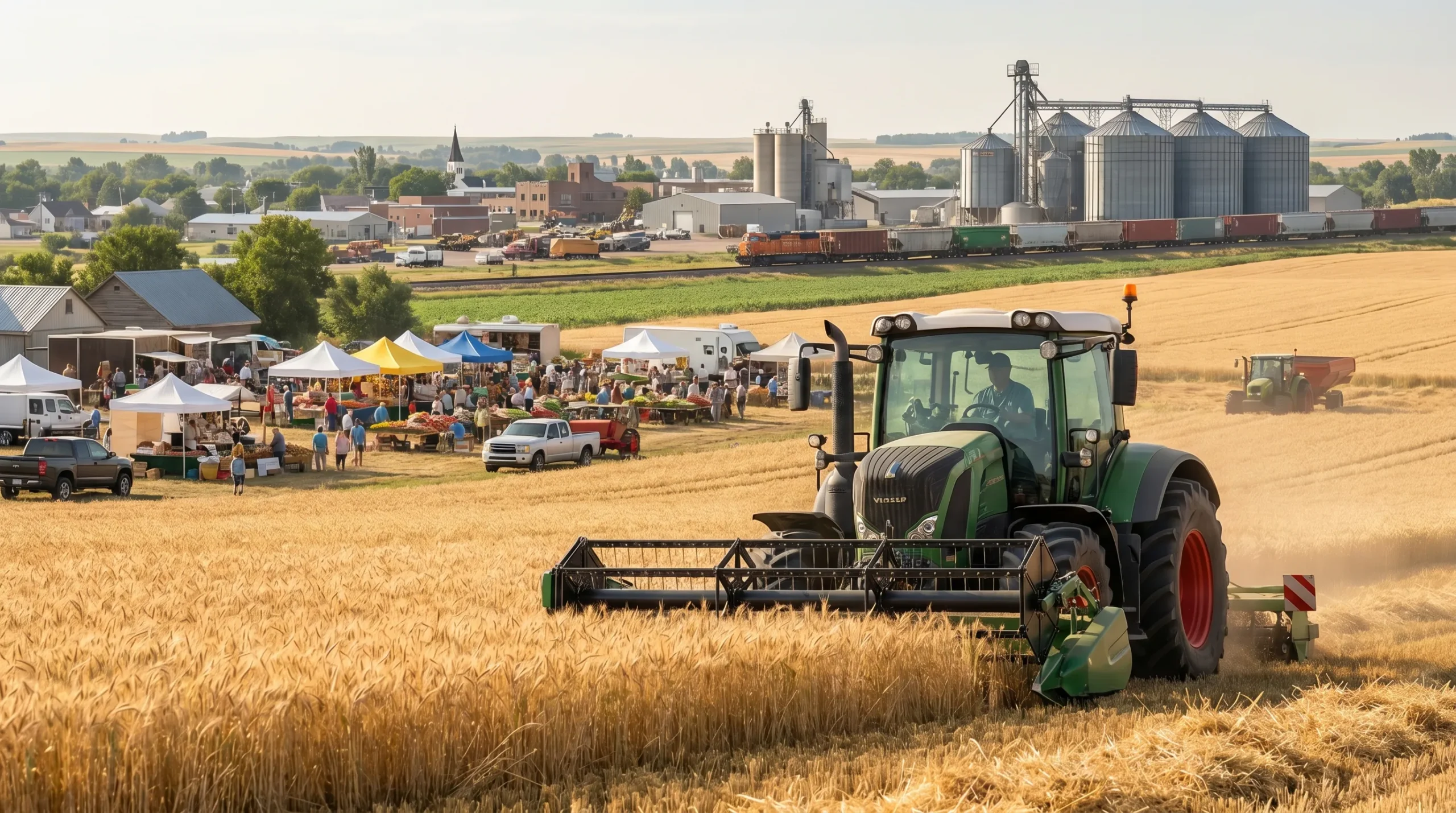
Discuss the importance of agriculture for economic development and you quickly see that agriculture is far more than the simple act of growing crops or raising animals. It is a foundation for food production, employment opportunities, rural livelihood, industrial development, trade, and long-term economic growth. In many countries, the agriculture sector supports both basic survival and broader national progress by feeding people, supplying raw materials, generating income, and connecting rural communities to the wider economy.
When people think about development, they often focus on factories, services, or technology. But no economy can grow in a stable way without a strong food system, reliable farm output, and productive use of land and natural resources. Even in advanced economies, agriculture and food-related industries contribute major economic value. In the United States, for example, agriculture, food, and related industries accounted for about $1.537 trillion, or 5.5 percent of GDP, in 2023, while farms alone contributed about $222.3 billion, or 0.8 percent of GDP.
This is why the importance of agriculture in economic development remains such a powerful topic. Agriculture supports food security, strengthens community resilience, drives agribusiness, improves trade balance, and creates the conditions needed for healthier, more stable societies. A country that invests in modern, sustainable agriculture is usually investing in its own future.
What Agriculture Means in Economic Development
In economic terms, agriculture in economic development means much more than growing wheat, rice, maize, fruits, or vegetables. It includes the full chain of activity linked to the land: planting, harvesting, livestock management, storage, processing, transportation, and distribution. It also includes the way these activities create value across the economy through farm-related industries, food processing, retail, logistics, and exports.
This is why economists often describe agriculture as a driver of economic development. It creates direct value on farms, but it also creates indirect value through the industries that support it. A farmer buys seeds, tools, irrigation equipment, and fertilizer. Then harvested products move into markets, storage centers, food and beverage manufacturing, restaurants, and stores. Every step adds jobs, income, and economic activity.
A simple way to understand this is through the idea of the agricultural value chain. Agriculture begins in the field, but its real economic influence stretches far beyond the field. Crops become food, textiles, oils, feed, fuel, and industrial materials. This is one reason the importance of agriculture beyond food production deserves more attention. Agriculture does not only fill plates. It also supports factories, trade networks, local businesses, and entire regional economies.
In many places, especially lower-income countries, agriculture also has a strong multiplier effect. When farm incomes rise, rural families spend more on clothing, tools, transport, education, and housing. That spending supports non-farm jobs and local enterprise. So when people ask why agriculture is important in economic development, the answer is clear: agriculture starts as a primary activity, but its benefits spread into nearly every area of life and business.
Agriculture as the Basis of Food Security and Stability
One of the clearest benefits of agriculture is food security. A country cannot build a healthy economy if its people face hunger, food scarcity, or unstable prices. Strong agriculture helps ensure a steady domestic supply of food, reduces overdependence on imports, and improves national self-sufficiency.
This matters at both the household and national level. Food is a basic human need, but it is also an economic issue. When food systems are weak, families spend more of their income on essentials, governments face greater pressure, and economies become more vulnerable to global shocks. USDA data show that in 2023, food accounted for 12.9 percent of U.S. household expenditures, compared with 12.8 percent in 2022. Housing represented 32.9 percent, and transportation 17.0 percent. These figures show how closely food spending is tied to household stability and living standards.
Agriculture also protects societies from major disruptions. A country that produces more of its own food is generally better prepared to handle supply chain problems, weather shocks, or price spikes in the global market. This is why how agriculture ensures food security is one of the strongest arguments for agricultural investment. It is not only about feeding people today. It is also about protecting the future.
In practical terms, good agriculture supports food systems, stabilizes supplies, and lowers the risk of panic during crises. Strong farming systems also reduce excessive reliance on overseas imports. That makes agriculture relevant not just to nutrition, but also to national security, social order, and public confidence.
How Agriculture Creates Jobs, Income, and Rural Livelihoods
Another major reason agriculture matters is its role in employment. In many countries, agriculture remains one of the biggest sources of work, especially in rural areas. It provides jobs directly on farms and indirectly in packaging, transport, storage, trade, animal care, machinery repair, and food services.
This is especially important for rural communities, where farming often supports household income and local demand. A strong farm season can increase business for shopkeepers, transport workers, market traders, millers, and processors. Agriculture therefore strengthens both rural livelihood and local economies.
The U.S. example also shows how agriculture supports employment beyond the farm. In 2021, the food and beverage manufacturing sector employed about 1.7 million people, or 1.1 percent of all U.S. nonfarm employment. About a third of those employees worked in meat and poultry plants. These figures highlight a key truth: the economic power of agriculture is not limited to farmers alone. It spreads into manufacturing, processing, and distribution.
For developing economies, this point is even more important. Agriculture often serves as the first large-scale employer for people with limited formal training or access to urban jobs. It becomes a path to income, participation, and community stability. This is why how agriculture creates employment opportunities and how agriculture supports rural communities are both essential to the broader story of development.
Agriculture also helps reduce distress migration. When rural people can earn a living locally, they are less likely to leave under economic pressure. That creates more balanced national development. Instead of concentrating all opportunity in cities, agriculture helps spread economic activity more widely across a country.
Agriculture’s Contribution to GDP, Trade, and National Income
A strong case for the importance of agriculture in economic development comes from its measurable economic contribution. Agriculture adds value to national output through crops, livestock, fisheries, forestry, food processing, and related trade activity. That contribution may appear modest if measured only at the farm gate, but it becomes much larger when related industries are included.
Again, the USDA numbers are useful. In 2023, agriculture, food, and related industries contributed around $1.537 trillion to U.S. GDP, equal to 5.5 percent of total GDP. Farms themselves contributed $222.3 billion, or 0.8 percent. This shows why focusing only on raw farm output can underestimate the real importance of agriculture.
Agriculture also supports agricultural trade and foreign exchange earnings. Countries export grains, fruits, vegetables, meat, dairy products, fibers, oils, and processed foods. These exports can strengthen the trade balance, support currency stability, and increase national income. For many economies, especially those with strong natural conditions for farming, agriculture becomes a gateway to participation in the global market.
The broader lesson is simple. Agriculture and the economy are deeply connected. Farm production feeds into transport, storage, export services, wholesaling, supermarkets, restaurants, and industrial supply chains. It is one of the clearest examples of how one sector can generate value across many others.
Here is a simple summary:
| Area | How agriculture contributes |
| GDP | Adds direct and indirect value through farms, processing, and related industries |
| Trade | Generates exports and supports foreign exchange earnings |
| National income | Raises incomes for producers, workers, and linked businesses |
| Consumer markets | Supplies goods for local sale and household consumption |
| Economic stability | Reduces vulnerability created by weak food supply systems |
That is why how agriculture contributes to gross domestic product is not only a statistical question. It is a question about how wealth is created and distributed across a nation.
Agriculture Supports Industry and Agribusiness
One area competitors often mention but do not fully develop is agriculture’s role as a supplier of raw materials. This is crucial. Agriculture feeds industry by providing inputs for food and beverage manufacturing, textiles, leather products, bio-based materials, and even energy-related products such as biofuels and bioplastics.
This is where agribusiness becomes important. Agribusiness includes the commercial systems that connect farming to storage, finance, technology, processing, marketing, and export. In other words, agriculture becomes more economically powerful when it is linked to business systems that raise productivity and market value.
USDA data include agriculture-related sectors such as food and beverage stores, food services and eating/drinking places, and textiles, apparel, and leather products. These connections show that agriculture is not isolated. It is part of a wider economic network.
This is why importance of agribusiness in supporting economic development is such a valuable phrase. Agribusiness transforms raw agricultural output into broader economic opportunity. It helps farmers access markets, helps processors create jobs, and helps national economies move beyond low-value production into higher-value commercial activity.
A country that develops agriculture well can also develop its farm to market supply chain, reduce waste, improve logistics, and create stronger industrial linkages. That is a major reason agriculture and industrial raw materials belong in any serious discussion of development.
Technology, Innovation, and Productivity in Modern Agriculture
Modern development requires modern agriculture. Today, agricultural progress depends increasingly on innovation and technology, including precision farming, improved seeds, better irrigation, data tools, and more efficient post-harvest handling.
Competitors touched on drones, satellite imagery, GPS, and genetically modified crops, and these examples matter because they show how agriculture is changing. Technology allows farmers to use water more efficiently, reduce unnecessary chemical use, predict crop stress, improve yields, and lower waste. In that sense, technology improves both productivity and sustainability.
This is also where digital agriculture, smart farming, and agricultural mechanization become important gap topics. A modern article should explain that development is not just about having more farmland. It is about getting more value from the land through knowledge, tools, and better systems.
For small farmers, even simple improvements can matter: better irrigation systems, access to weather information, stronger storage, and improved market information. For larger operations, advanced tools such as sensors, imaging, and precision application systems help raise efficiency. In both cases, the result is similar: better crop yields, lower losses, and greater economic value.
So when people ask how innovation and technology improve agriculture, the answer is that technology makes farming more productive, less wasteful, more resilient, and more profitable. That creates stronger foundations for long-term economic growth.
Agriculture and Environmental Sustainability
Economic development is not truly successful if it destroys the natural systems it depends on. That is why environmental sustainability is central to the future of agriculture. Healthy soil, reliable water, biodiversity, and careful use of natural resources all shape the long-term productivity of the land.
Sustainable agriculture protects both present and future development. Good farming practices can reduce soil erosion, improve water conservation, protect biodiversity, and support ecological balance. Techniques such as drip irrigation, crop rotation, better soil management, and precision input use help agriculture stay productive while reducing waste.
This is where climate-smart agriculture and agriculture and climate change adaptation become especially valuable gap topics. Many articles say agriculture should be sustainable, but better content explains how. For example, climate-smart practices can include drought-resistant crops, efficient irrigation, improved forecasting, diversified production, and better risk planning.
There is also a practical economic reason to care about sustainability. Degraded land lowers yields. Poor water management raises costs. Biodiversity loss weakens ecological support systems. Over time, all of this reduces income and slows development. So how agriculture supports environmental sustainability is not separate from economic development. It is part of it.
A productive agriculture sector must therefore balance output with stewardship. The best development model is not short-term extraction. It is long-term resilience.
Agriculture, Community Development, and Poverty Reduction
Agriculture also shapes the social side of development. It helps create stronger households, more stable villages, and more resilient local economies. When farming incomes improve, communities often see gains in education spending, health access, food quality, and local business activity.
This is why agriculture is closely linked to community resilience and social development. In many places, agriculture is the economic center of daily life. Markets, transport systems, processing facilities, and seasonal labor networks all grow around it. As a result, agriculture can reduce poverty not only by producing food but also by producing opportunity.
This is one of the most important content gaps competitors missed: role of agriculture in poverty reduction. For millions of people, agriculture is the first and most realistic path toward income improvement. This is especially true for smallholder farmers, women working in informal farm systems, and young people entering rural labor markets.
Agriculture can also reduce inequality between rural and urban areas. When governments invest in roads, storage, irrigation, and extension support, agricultural regions become more connected and productive. That helps spread the benefits of growth across a country instead of concentrating them in only a few cities.
In this sense, the importance of farmers in economic development should never be understated. Farmers do not only supply food. They support livelihoods, sustain local markets, and anchor the social fabric of entire communities.
Why Agriculture Matters Even More in Developing Countries
The importance of agriculture is often even greater in developing economies. In such countries, a large share of the population may depend directly or indirectly on farming. Agriculture supports employment, nutrition, household income, and national income all at once.
This is why importance of agriculture in developing countries deserves direct attention. In many low-income economies, agriculture is still the backbone of rural life. It supports subsistence farming, commercial farming, and small-scale trade. It may also provide the raw materials needed for early industrial growth.
At the same time, these countries often face challenges such as poor infrastructure, low access to finance, limited storage, and market inefficiencies. That means the gains from better agriculture can be especially large. A modest increase in farm productivity can raise incomes, strengthen food access, and improve national stability.
Agriculture also helps support sustainable rural transformation. When productivity rises, families can save more, invest more, and create demand for other goods and services. Over time, that can lead to broader economic diversification. In this way, agriculture does not block development. It often starts it.
Challenges That Limit Agriculture’s Role in Development
A strong article should also be balanced. Agriculture is essential, but it does face real barriers. These include post-harvest losses, weak infrastructure, limited market access, poor storage, land degradation, and outdated policy systems.
In some countries, farm roads are poor, irrigation is weak, and storage facilities are inadequate. As a result, products spoil before reaching the market. That reduces farmer income and weakens the wider economy. Problems such as low soil fertility, limited extension services, and poor access to technology can also hold agriculture back.
Climate shocks add another layer of risk. Floods, droughts, and changing rainfall patterns can hurt output and raise uncertainty. Without investment in adaptation and resilience, these pressures can slow development and increase food insecurity.
This is why government support for agriculture, agricultural policy, and public investment matter so much. Stronger infrastructure, research, training, market access, and risk management systems can turn agriculture into a much more powerful engine of growth.
Conclusion
The importance of agriculture in economic development is impossible to ignore. Agriculture supports food security, creates employment opportunities, strengthens rural communities, contributes to GDP, supplies raw materials for industry, and supports national stability. It also becomes even more valuable when linked with agribusiness, modern technology, sustainability, and smart policy.
The evidence is clear. Agriculture, food, and related industries contributed about $1.537 trillion to U.S. GDP in 2023, while agriculture-linked industries supported major employment and household stability. But the lesson goes far beyond one country. Around the world, agriculture remains one of the strongest foundations for broad-based development.
So, why agriculture is the backbone of the economy is not just a slogan. It is a practical truth. A nation that strengthens its agriculture strengthens its food system, its labor market, its communities, and its future.