
 By adnanshabbir942@gmail.com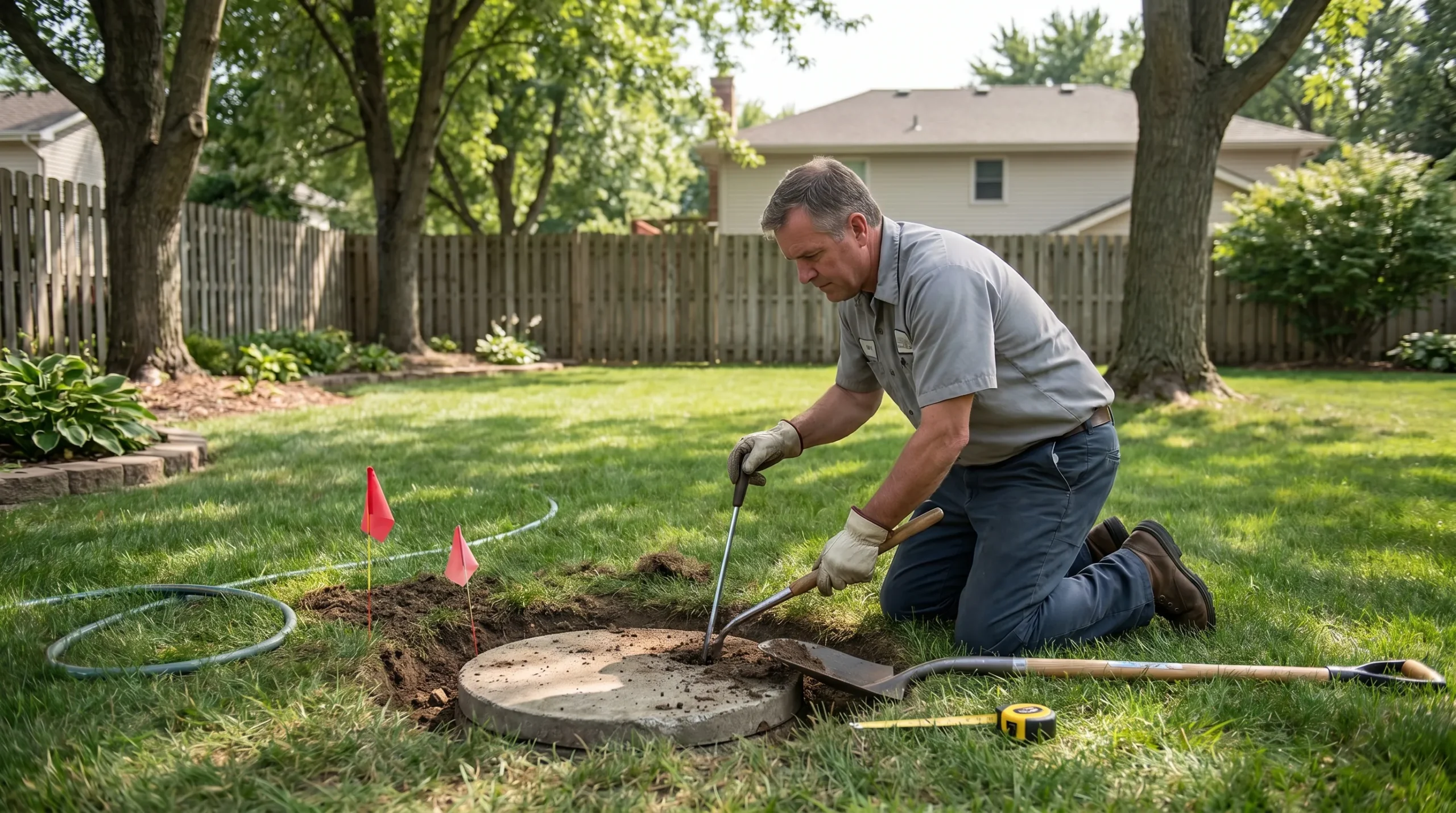
How do I find the lid to my septic tank is a common question for homeowners who need septic tank pumping, an inspection, repairs, or basic septic system maintenance. The lid is the access point that allows a septic professional to open the tank, inspect the inside, and pump out waste when needed.
The problem is that many septic tank lids are not easy to see. Some are covered by grass, soil, mulch, landscaping, patios, or old yard changes. Others may be buried several inches underground, especially on older properties.
Finding your septic tank lid matters because it can save time, reduce digging costs, prevent yard damage, and help you respond faster during a septic emergency. A buried or hidden lid can delay service when you have slow drains, gurgling sounds, sewage odors, or a backup.
This guide explains how to find septic tank lid locations safely using property records, the main sewer line, visible yard clues, a soil probe, and professional help when needed.
Quick Answer: How Do I Find the Lid to My Septic Tank?
The safest way to find the lid to your septic tank is to start with records, then narrow down the location before digging. First, check your property records, septic permits, as-built diagrams, or closing documents. These may show the septic tank location, drain field, and pipe layout.
Next, look for where the main sewer line exits your home. In many homes, the septic tank is located in a fairly straight line from the foundation exit point, often somewhere between 5 to 25 feet from the foundation, although this can vary.
After that, inspect your yard for clues such as greener grass patches, slight mounds, ground depressions, faster snow melt, or a visible septic riser cover. If the location is still unclear, use a soil probe gently in a grid pattern to feel for the tank edges.
A simple process looks like this:
- Check property records or septic system plans.
- Follow the main sewer line from the house.
- Look for yard signs such as mounds, depressions, or unusual grass.
- Use a soil probe carefully to locate the tank edge.
- Dig gently by hand once the spot is narrowed down.
- Call a septic service professional if the lid is deep, damaged, or hard to identify.
Before digging deeply, always think about underground utilities and local safety rules.
Safety First: What to Know Before Searching or Digging
Finding a septic tank lid is not the same as safely opening it. Septic tanks can contain toxic sewer gases, including hydrogen sulfide, and the inside of a tank is considered a dangerous confined space. You should never enter a septic tank, lean over an open tank, or let children or pets near the work area.
A heavy concrete lid can also be difficult to move. Older lids may be cracked, loose, or weak. A damaged lid can create a serious fall hazard, especially if it is hidden under grass or soil.
Before you start digging, be careful with sharp tools. A shovel, metal rod, or probe can damage pipes if used too aggressively. Also avoid using heavy equipment unless a professional has confirmed the location of the tank, pipes, and drain field.
For safety, keep these points in mind:
| Safety Concern | Why It Matters |
| Open septic tank | Can expose people to dangerous gases and fall risks |
| Heavy lids | May cause injury if lifted without help |
| Underground utilities | Digging blindly can damage lines |
| Children and pets | They should stay far away from the area |
| Cracked lid | May collapse or shift unexpectedly |
If the lid looks damaged, unstable, or too heavy, stop and contact a professional septic service.
Start With Property Records, Septic Permits, and Site Plans
The best first step is to check paperwork before touching the ground. Many homeowners waste time digging in random spots when the answer may already be in their property documents.
Look for:
- As-built plans
- Septic system plans
- Building plans
- Blueprints
- Closing documents
- Home inspection diagrams
- Maintenance receipts
- Septic permits
- Records from the county health department or building department
These documents may show the location of the septic tank, septic tank lid, drain field, distribution box, and main sewer line. If you recently bought the home, check your inspection packet or ask the previous owner if they have a septic map or service history.
Older properties may not have complete records, but it is still worth checking. A hand-drawn map from a previous homeowner or a receipt from a pumping company may show where the lid was uncovered in the past.
How to Search for Septic Records Online
You may be able to find septic records online through your local government website. Search for your county name plus phrases like “septic permit search,” “onsite wastewater records,” “environmental health septic records,” or “county GIS map.”
Some counties provide a property parcel map or permit database where you can search by address. Others may require a phone call to the local health department or environmental health office. Availability depends on the area, so do not worry if your county does not have everything online.
Trace the Main Sewer Line From Your House
If records do not give you a clear answer, the next step is to trace the main sewer line. In many homes, the wastewater pipe exits through the basement, crawlspace, or foundation wall and runs toward the septic tank.
Start inside the house if possible. Look for the main drain line in the basement or crawlspace. It is often a larger pipe, commonly around a 4-inch main sewer line, that leaves the home through the foundation. Once you identify the foundation exit point, go outside and imagine a straight line extending from that spot into the yard.
The septic tank is often located along that line, commonly 10 to 25 feet from the house, although this is not a fixed rule. Landscaping, additions, slopes, and older installation methods can change the layout.
A cleanout pipe near the house can also help you understand the direction of the sewer line. However, a cleanout is not the same thing as the septic tank lid. It simply gives access to the pipe.
Use sewer-line tracing as a clue, not a guarantee. It should help you narrow the search area before using a probe or calling a professional.
Look for Yard Clues That May Reveal the Septic Tank Location
Your yard may give you helpful signs. Many homeowners locate a buried septic tank lid by noticing small differences in grass, soil, or landscaping.
Common yard clues include greener grass patches, lusher grass, a slight mound, a low spot, ground depressions, or soil that seems different from the surrounding area. In colder regions, you may notice faster snow melt over the tank area because the ground temperature can vary slightly.
Also look for areas where previous owners may have hidden or marked the lid. A garden statue, decorative rock, landscape boulder, flower bed, or unusual patch of mulch may be covering an access point.
However, be careful when reading yard signs. Soggy ground, pooling water, strong odors, or unusually lush grass can also point to septic trouble, not just the lid location. These signs may indicate a saturated drain field, sewage backup, or system failure.
Use yard clues together with records and sewer-line direction. Do not dig up random areas based on grass color alone.
Use a Soil Probe Carefully to Find the Tank Edges
A soil probe, also called a septic probe, probe rod, or metal probe, can help you feel for the tank underground. This method is common, but it must be done gently.
Once you have a likely search area, probe the ground in a slow grid pattern. Push the probe down carefully and feel for a change in resistance. Soil feels softer than a concrete or plastic tank. When the probe touches something solid and flat, it may be the tank surface, tank edge, or septic tank cover.
The goal is not to stab the ground aggressively. The goal is to locate the tank perimeter, then work toward the center or lid area. If you force the probe, you could damage pipes, seals, or nearby septic components.
A careful probing process may include:
- Start near the expected sewer-line path.
- Probe every few feet in a grid pattern.
- Mark spots where you feel solid resistance.
- Map the likely tank edges.
- Dig only after narrowing the lid location.
If the tank seems very deep or the probe hits something uncertain, stop and call a professional.
Can a Metal Detector Help Find a Septic Tank Lid?
A metal detector can sometimes help locate septic tank lid areas, but it does not work in every case. It may detect a metal handle, metal fastener, steel tank, or steel rebar inside a concrete lid.
However, many modern lids are plastic, fiberglass, or concrete with little exposed metal. A metal detector may also pick up unrelated buried items, such as old nails, pipes, wires, or landscape materials.
A metal detector is most helpful when you already have a narrowed search area from records, sewer-line tracing, or yard clues. It should not be your only method.
If the lid is plastic or fiberglass, a metal detector may not find it. In that case, a soil probe, sewer camera locator, or professional locating equipment may be more useful.
What Does a Septic Tank Lid Look Like?
A septic tank lid may look different depending on the tank age, material, and design. Some lids are round, some are rectangular, and some are part of a larger access cover. The lid may be made of concrete, plastic, fiberglass, or metal.
Many lids are roughly 2 feet wide, while some access openings may be 2–4 feet wide. A concrete lid may blend into the ground once it is covered with soil. Plastic lids are often green or black and may be connected to a septic riser that reaches ground level.
Common lid features include:
| Lid Feature | What It May Look Like |
| Concrete lid | Heavy, gray, flat, sometimes with a seam |
| Plastic lid | Green or black round cover |
| Fiberglass lid | Lightweight cover, often over a riser |
| Recessed handle | Small handle or pull point set into the cover |
| Lid seam | A visible line around the access cover |
Single-Lid vs Two-Lid Septic Tanks
Some septic tanks have a single-lid system, while others have a two-lid system with an inlet lid and an outlet lid. A septic professional may ask for both lids to be exposed so they can inspect the inlet pipe, outlet pipe, baffles, sludge level, and overall tank condition.
If you find one lid, do not assume it is the only one. There may be another access point nearby.
How Deep Is a Septic Tank Lid Usually Buried?
The depth of a buried septic tank lid depends on the system design, soil changes, landscaping, and whether a riser has been installed. Some lids are only a few inches below the surface. Others may be around 1 foot deep, while older or heavily landscaped systems may be deeper.
In some cases, a lid can be 4 inches to 4 feet underground. If the lid is buried very deep, it may be safer and more practical to call a septic contractor instead of digging alone.
If your lid is difficult to reach, consider installing a septic tank riser after it is found. A riser brings the access point closer to ground level, making future septic tank pumping and inspections easier.
Deep lids are not only inconvenient; they can also increase labor costs during service appointments. That is why marking the location after finding it is so important.
Dig Carefully Once You Narrow Down the Lid Location
Once you have a strong idea of where the lid is, dig slowly by hand. Use a shovel or hand trowel and remove soil carefully. Avoid striking the ground hard with sharp tools because you may damage the lid, pipe, or tank components.
Dig only in the narrowed area where records, yard clues, sewer-line direction, or probing suggest the access cover is located. Do not dig randomly across the yard.
As you remove soil, look for a concrete surface, lid seam, plastic riser cover, or recessed handle. If you find a pipe, cable, unstable soil, or unexpected structure, stop and reassess before continuing.
You should also avoid fully opening the tank unless you know what you are doing and have proper help. In most cases, the homeowner’s job is simply to locate and expose the lid for a pumping technician or septic professional.
Septic Tank Lid vs Cleanout Pipe: How to Tell the Difference
One common mistake is confusing a cleanout pipe with the septic tank lid. A cleanout pipe is usually a smaller capped pipe that gives access to the sewer line. The septic tank lid is a larger access cover over the actual tank.
| Feature | Septic Tank Lid | Cleanout Pipe |
| Purpose | Gives access to the septic tank | Gives access to the sewer pipe |
| Size | Usually much larger | Usually a smaller pipe cap |
| Location | Over the tank | Along the sewer line |
| Used for | Pumping and inspection | Clearing clogs or checking the pipe |
| Appearance | Round or rectangular cover | Vertical or angled capped pipe |
A cleanout can help you trace the main sewer line, but it is not where the tank is pumped. If your septic company asks you to expose the lid, they usually mean the large tank access cover, not just the cleanout cap.
What Not to Do When Looking for a Septic Tank Lid
Finding a septic lid is easier when you avoid common mistakes. The biggest mistake is digging randomly without checking records, sewer-line direction, or yard clues first. Random digging can damage the lawn, pipes, sprinkler lines, or septic components.
Do not drive or park heavy vehicles over the suspected septic tank or drain field. Driving over septic tank areas can cause compaction, pipe damage, or even tank collapse, especially with older systems.
Also avoid planting trees near the tank or lid. Roots can interfere with pipes and covers. Do not cover the lid with heavy landscaping, large rocks, patios, or permanent structures.
Most importantly, do not open a damaged lid or lean over an open septic tank. Toxic sewer gases, heavy lids, and fall hazards make this dangerous.
A good rule is simple: locate carefully, dig gently, mark clearly, and call a professional when anything feels unsafe.
What to Do If the Lid Is Under Landscaping, a Patio, or Driveway
Sometimes a septic lid is hidden under mulch, shrubs, a patio, deck, driveway, or other landscaping. This is frustrating, but it happens often on older properties or homes where previous owners changed the yard.
If the lid is under light landscaping, such as mulch or small plants, you may be able to uncover it carefully. But if it is under paved surfaces, heavy stone, a deck, or a driveway, do not start demolition without expert guidance.
A professional locating service can confirm the exact tank location before you remove anything. This can prevent costly mistakes and unnecessary damage.
If your lid is difficult to access, this is a good time to ask about a septic riser or improved access cover. Keeping the lid accessible can save time during future pumping, inspection, and emergency service.
When to Call a Septic Professional
You should call a septic service professional if you cannot find the lid after checking records, tracing the sewer line, and looking for yard clues. You should also call if the lid is buried too deep, appears cracked, sits under hardscaping, or is needed during a backup.
Professionals may use tools such as an electronic locator, sewer camera inspection, camera with locating sonde, specialized locating equipment, or ground-penetrating radar. These methods can be faster and less damaging than guessing.
Call a pro right away if you notice:
- Sewage backing up into the home
- Strong septic odors
- Standing wastewater in the yard
- Slow drains throughout the house
- Gurgling sounds from plumbing fixtures
- A cracked, loose, or unsafe lid
- A lid buried under a driveway, patio, or deck
This section has a commercial intent because the user may need professional septic services. Still, the goal is to help the homeowner make a safe, informed decision.
What to Do After You Find the Septic Tank Lid
Once you find the septic tank lid, do not stop there. Record the location so you do not have to repeat the process next time.
Take photos from several angles. Measure the lid from fixed landmarks, such as the corner of the house, a fence post, or a large tree. Create a simple hand-drawn map and keep it with your maintenance receipts, inspection reports, and septic permits.
You can also mark the area with a small flag, decorative marker, or landscape feature that does not block access. Avoid heavy rocks, permanent planters, or anything a technician would need to remove.
Because many tanks need pumping every 3–5 years, keeping the lid accessible can make future service faster and easier.
Should You Install a Septic Riser?
A septic riser is an extension that brings the tank access closer to the surface. It may be made from PVC, polyethylene, or other approved materials. A riser can reduce digging, make inspections easier, and improve ground-level septic access.
If your lid is deeply buried or hard to find, ask a professional whether a riser is a good option.
Seasonal Tips for Finding a Septic Tank Lid
Weather can affect how easy it is to find a septic lid. In winter, frozen ground and snow can make digging difficult. However, faster snow melt may sometimes reveal the general tank area.
In spring, wet soil can make yard clues more visible, but it can also make digging messy. Heavy rain may create soggy ground, pooling water, or septic odors if the system is struggling. In summer, landscaping projects often uncover or hide septic access points.
The best time to locate and mark your lid is before an emergency. Do not wait until a winter freeze, heavy rain, or sewage backup forces you to search under pressure.
New Homeowner Checklist for Finding and Recording the Septic Lid
If you are a new homeowner, locating the septic tank lid should be part of your home maintenance plan. Do this before your first pumping appointment or emergency.
Use this simple checklist:
- Ask the seller where the tank and lid are located.
- Review closing documents and inspection reports.
- Search for septic permits or as-built diagrams.
- Call the county health department if records are missing.
- Ask for previous pumping or repair receipts.
- Take photos once the lid is found.
- Measure the lid from permanent landmarks.
- Keep all septic records in one folder.
A small amount of organization now can save you stress and digging later.
FAQ About Finding a Septic Tank Lid
Where is a septic tank usually located?
A septic tank is often located in the yard along the path of the main sewer line, usually away from the house but not too far from the foundation. Many tanks are commonly found around 5 to 25 feet from the foundation, but every property is different.
How far from the house is a septic tank lid?
The lid may be around 10 to 25 feet from the house, but this is only a general range. Older systems, slopes, additions, and unusual layouts can change the distance.
How deep is a septic tank lid buried?
A septic tank lid may be only a few inches below ground, around 1 foot deep, or in some cases several feet down. Some lids may be 4 inches to 4 feet underground, depending on the system.
Can I find my septic tank lid without digging?
Sometimes, yes. You may locate it through property records, septic permits, yard clues, a metal detector, or a professional locator. However, light digging is often needed to expose the actual lid.
Can a metal detector find a septic tank lid?
A metal detector may help if the lid has a metal handle, rebar, or metal parts. It may not help with plastic or fiberglass lids.
What if my septic tank has two lids?
Some tanks have an inlet lid and an outlet lid. A septic professional may need both exposed for proper pumping and inspection.
How do I know if I found the septic tank or the drain field?
The septic tank usually has a solid cover or tank surface. The drain field is a wider soil absorption area and should not have a large tank lid. If you are unsure, stop digging and call a professional.
Is it safe to open a septic tank lid myself?
In most cases, it is safer to let a trained professional open the lid. Septic tanks can contain dangerous gases, heavy lids, and fall hazards.
Who do I call if I cannot find my septic tank lid?
Call a septic contractor, plumber with septic experience, pumping company, or professional locating service. They can use specialized equipment to find the lid safely.
Conclusion: Find It Safely, Mark It Clearly, and Keep It Accessible
Finding the answer to how do i find the lid to my septic tank starts with a safe, organized process. Check records first, trace the main sewer line, look for yard clues, use a soil probe carefully, and dig gently only after narrowing down the location.
Once you find the septic tank lid, take photos, measure from fixed landmarks, mark the spot, and keep the area clear. If the lid is deep, damaged, hidden under hardscaping, or needed during an emergency, call a professional septic service. A properly marked and accessible lid makes future septic tank maintenance, pumping, and inspections much easier.
Disclaimer:
This article is for general informational purposes only and does not replace professional septic or plumbing services. Septic tank locations, lid access, excavation depth, and safety considerations can vary by property, system type, and local regulations, so homeowners should follow safety guidelines and consult qualified septic professionals when locating, uncovering, or maintaining a tank.