
 By adnanshabbir942@gmail.com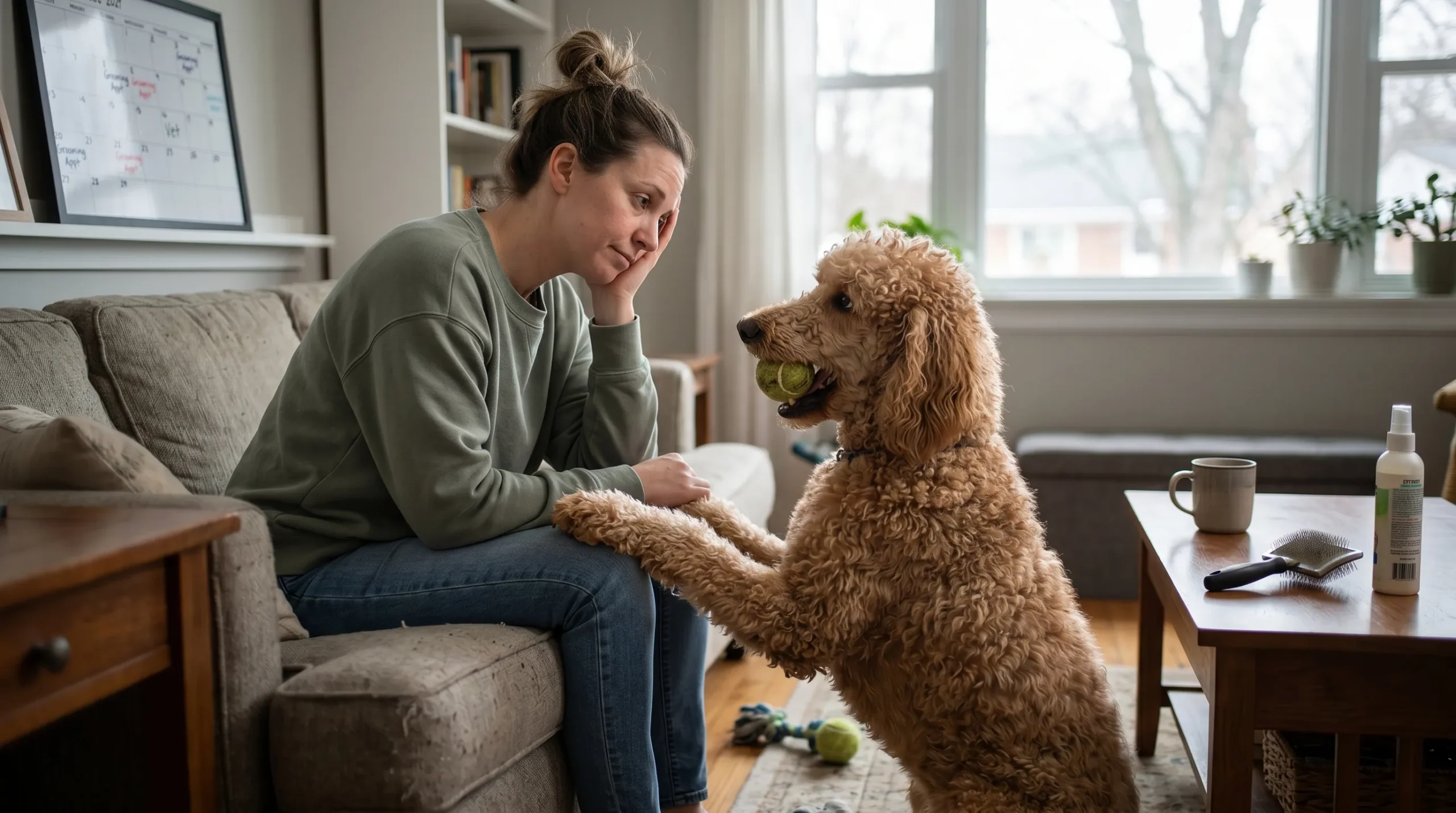
Why poodles are the worst is a question people usually ask after a bad experience, a mismatch in expectations, or a frustrating stretch of dog ownership. The honest answer is that Poodles are not the worst dogs, but they can feel like the worst fit for some owners because they are smart, sensitive, active, and grooming-heavy. That combination can be wonderful in the right home and exhausting in the wrong one.
A lot of the breed’s bad reputation comes from stereotypes. Some people see the curly coat and fancy clips and assume Poodles are prissy, snobbish, or overly delicate. Others focus on the harder parts of ownership: daily brushing, frequent grooming appointments, boredom-related behavior, barking, or clinginess. But those issues do not mean the breed is “bad.” They usually mean the dog’s needs and the owner’s lifestyle are not lining up well.
That matters because Poodles are widely recognized as highly intelligent, trainable, and available in three sizes: Standard, Miniature, and Toy. Their coats also require serious upkeep, often including professional grooming every four to eight weeks depending on coat length and maintenance, and regular brushing to prevent matting. They are also energetic dogs that often do best when they get consistent exercise, structure, and mental enrichment.
So if you are searching why are poodles the worst, the better question is this: why do some people struggle so much with Poodles, and would this breed actually fit your life? That is where the real answer starts.
Why Do Some People Think Poodles Are the Worst?
Most complaints about Poodles fall into a few predictable categories. Owners say they are too high-maintenance, too sensitive, too vocal, too demanding, or simply too much work. In other words, the frustration usually comes from effort, not from the breed being hopeless.
This is also why the phrase poodle bad reputation shows up so often. People may expect a low-shedding dog to be easy, only to discover that low shedding does not mean low maintenance. They may want a smart dog, then realize a smart dog also notices everything, gets bored quickly, and can invent its own entertainment if the day feels empty. They may expect a cuddly companion, then struggle with a dog that becomes stressed when left alone too long.
There is also a strong breed stereotype problem. Poodles are often judged by appearance instead of function. In reality, they were developed as working dogs, and breed organizations still emphasize their athletic ability, trainability, and versatility. That is a very different image from the “frou-frou” stereotype many people still carry.
So, why do some people dislike Poodles? Usually because they wanted a dog that would ask for less: less grooming, less training, less exercise, less attention, and less routine.
High Grooming Needs Are a Major Reason People Struggle With Poodles
If there is one complaint that comes up again and again, it is grooming. A Poodle’s curly coat may shed less than many other breeds, but it keeps growing and tangles easily. That means daily brushing is often needed to keep the coat from turning into a web of knots and mats. On top of that, many Poodles need professional grooming every six to eight weeks, and some clipped styles need attention even sooner.
That alone explains why some people feel that why poodles are the worst choice is not an exaggeration. Grooming takes time, money, and consistency. Skip brushing for a while, and the coat can become uncomfortable, messy, and expensive to fix. The same is true for nail care, ear care, and dental care, all of which matter more when an owner is already falling behind.
Here is the part many first-time owners miss: a low-shedding coat is often a trade-off. You get less hair on the couch, but you take on more work in the bathroom, at the groomer, and with the brush in your hand. PetMD also notes that there is no such thing as a completely hypoallergenic dog, even though Poodles may be a better fit for some allergy sufferers than many other breeds.
A simple snapshot makes the burden easier to understand:
| Care Area | What Many Owners Expect | What Poodles Often Need |
| Shedding | Very little hair, easy upkeep | Less shedding, but more coat work |
| Brushing | Occasional | Often daily |
| Grooming visits | Rare | Often every 4–8 weeks |
| Coat problems | Minimal | Matting if neglected |
| Ear care | Basic | Extra attention, especially after baths or swimming |
For busy owners, this is the first big reason owning a Poodle can feel overwhelming.
Poodles Are Smart, but That Can Make Them Harder to Live With
People love saying Poodles are among the top smartest breeds, and that is true in a way that matters. Intelligence makes training easier, but it also makes boredom more dangerous. A bored Poodle can become noisy, pushy, destructive, or anxious simply because its mind is not getting enough to do.
That is why mental stimulation matters so much. Poodles often do well with obedience work, games, scent activities, problem-solving toys, and short training sessions built into daily life. Their intelligence is one reason they have been used in many roles beyond companionship, including service work, therapy work, and dog sports.
This is also where many owners make a major mistake. They search for a smart breed thinking it will be easier, when in reality a highly intelligent dog can be harder because it learns everything fast, including bad habits. If you are inconsistent, the dog notices. If your routine changes every day, the dog notices. If you leave it alone, under-exercise it, and skip training, the dog still notices.
So when people ask, are poodles difficult to own, the answer is often yes for households that want a dog to simply “settle itself.” Poodles usually do better when someone is actively shaping behavior with positive reinforcement, structure, and regular interaction.
Their Energy and Exercise Needs Can Surprise New Owners
Poodles are not just clever dogs. They are also active dogs. Different sizes have different needs, but in general they do better when they get regular movement, play, and tasks. PetMD notes clear size differences, with Standard Poodles usually needing more total exercise than Miniature or Toy Poodles.
A simple comparison helps:
| Poodle Type | Typical Exercise Pattern |
| Standard Poodle | More vigorous daily exercise and structured activity |
| Miniature Poodle | Moderate daily exercise plus play and training |
| Toy Poodle | Shorter daily exercise, but still needs enrichment |
Many owners do not realize that even smaller Poodles can still be energetic and mentally busy. A Toy Poodle may need less physical exercise than a Standard Poodle, but it can still become vocal, clingy, or mischievous if its routine is dull.
That is why the long-tail question how much exercise do poodles need per day matters. It is not just about a walk around the block. It is about whether the dog gets enough outlets for energy and attention. When the answer is no, frustration usually follows.
Sensitive Personalities Can Lead to Anxiety, Reactivity, and Stress
One of the most important things to understand about Poodles is their emotional sensitivity. Many are deeply tuned in to their people and their environment. That can make them affectionate and responsive, but it can also make them easier to stress.
A noisy home, long periods alone, poor socialization, rough handling, or an unpredictable routine can all hit a sensitive dog harder. That helps explain why some people describe Poodles as high-strung, anxious, or reactive. The issue is not that all Poodles are unstable. The issue is that sensitive dogs often show strain sooner.
This is also why separation anxiety in Poodles is such an important gap topic. Owners who work long hours or travel often may end up feeling that the dog is too needy. In reality, they may have a Velcro dog that thrives on human company and struggles when that connection disappears for too long.
If you have ever heard someone say, “My Poodle is sweet but too much,” this is often what they mean. The dog wants closeness, routine, stimulation, and calm communication. Without those things, dog anxiety, barking, pacing, or clingy behavior can start to build.
Barking, Chewing, and ‘Annoying’ Behavior Usually Have a Cause
A lot of the rawest anti-Poodle sentiment comes from behavior. People say Poodles are extremely vocal, that they bark at everything, chew objects, demand attention, or act annoying. Those complaints feel real to the owner, but they still need context.
Barking can come from alertness, boredom, excitement, anxiety, or poor impulse control. Chewing can come from puppy teething, under-stimulation, stress, or lack of supervision. Pushy behavior can come from a dog that has accidentally learned that noise gets results.
That is why barking management, crate training, short training sessions, and enrichment matter. The problem is usually not a bad dog. It is an unmet need or a behavior pattern that has been rewarded long enough to stick.
A quick case example shows how this often plays out:
A family gets a Miniature Poodle because they want a smart, low-shedding dog for apartment living. At first, everything feels easy. Then work gets busier, walks get shorter, brushing gets skipped, and the dog spends long stretches alone. Within a few months, the dog starts barking at hallway sounds, chewing soft items, and shadowing one family member all evening. The family thinks the breed is the problem. In reality, the routine is.
That kind of story is exactly why why poodles are the worst dogs often means “why this breed was a poor match for the life we actually live.”
Are Poodles Aggressive, Mean, or Bad With Other Pets?
This is one of the most emotionally loaded parts of the conversation. Some people search are poodles aggressive or overprotective because they had a bad encounter with one. Others wonder if Poodles dislike strangers, children, cats, or other dogs.
The fairest answer is that Poodles are not inherently mean dogs, but temperament still depends on breeding, early socialization, training, and environment. A well-bred, well-socialized Poodle can be friendly, playful, and steady. A poorly socialized or under-managed one may become wary, reactive, or overprotective.
Their background as intelligent working dogs also matters. Poodles were not created to be decoration. They were alert, responsive dogs with a job. That history helps explain both their trainability and their tendency to notice everything around them.
So, are poodles smart or friendly? Often yes. But friendliness is not automatic. It is shaped over time.
Standard, Miniature, and Toy Poodles Are Not Exactly the Same
One reason online opinions get messy is that people talk about “Poodles” as if all three sizes behave the same way. They do not. The Poodle Club of America recognizes three sizes: Standard, Miniature, and Toy. Standards are over 15 inches at the shoulder, Miniatures are over 10 inches and up to 15 inches, and Toys are 10 inches or under.
That size difference affects daily life. Standards often need more exercise and physical outlets. Toys can be easier to manage physically, but may feel more fragile in busy households. Miniatures often sit in the middle and can still be very lively and demanding.
So when someone says small poodles vs standard poodles, they are really asking about lifestyle fit. The easiest Poodle to manage is not the same for everyone. A highly active owner may love a Standard. A calm, attentive owner in a smaller space may prefer a Miniature or Toy. The wrong size for the wrong home can make the whole breed seem harder than it really is.
Health and Maintenance Problems Some Owners Are Not Prepared For
Another reason some owners grow resentful is cost. Grooming is one expense, but health care can be another. PetMD notes that Poodles can be prone to issues such as hip dysplasia, ear infections linked to allergies, and other inherited or maintenance-related concerns, depending on size and line.
That does not mean every Poodle will become expensive or medically fragile. It means responsible ownership matters. It also means buying from an ethical breeder or working with a good breed rescue can make a real difference.
This section is where many “worst breed” complaints are born. A person buys a dog for looks, ignores breeder quality, underestimates grooming, and then runs into chronic costs. The disappointment gets aimed at the breed, even though the deeper issue is poor preparation.
Poodles Are Not the Worst Dogs — They Are the Wrong Fit for Some People
This is the real conclusion. Poodles are not the worst dogs. They are simply not for everyone.
They may be a poor fit if you want a dog with minimal grooming, low training needs, low emotional sensitivity, and very little daily structure. They may also be hard for first-time owners who are choosing mostly on appearance or on the “hypoallergenic” label.
But they can be excellent for people who want a dog that is bright, responsive, active, and deeply connected to its family. In the right home, many of the breed’s hardest traits become its best traits.
Here is a quick fit guide:
| Good Fit For | Poor Fit For |
| Owners who enjoy training | Owners who want a low-effort dog |
| People who can manage grooming | People who dislike coat maintenance |
| Active households | Very sedentary households |
| Homes that offer routine and attention | Homes where the dog is alone for long stretches |
| People who want a smart, engaged companion | People who want independence and minimal demands |
That is why is a Poodle right for me is a much better question than why poodles are the worst.
Questions to Ask Before Getting a Poodle
Before bringing one home, ask yourself a few honest things. Can you afford regular grooming? Can you provide daily training and enrichment? Will the dog be left alone most of the day? Are you ready for a breed that may be emotionally sensitive? Do you want a dog that needs real interaction, not just food and walks?
Those questions matter because common mistakes new Poodle owners make are often very simple: they underestimate coat care, overestimate how “easy” intelligence will be, and do not think enough about companionship needs.
If your answers are solid, a Poodle might be a great match. If not, choosing another breed may be the kinder choice for both you and the dog.
Final Words: Are Poodles Really the Worst?
No. Poodles are not really the worst dogs. But they can absolutely feel like the worst dog for the wrong owner.
Their curly coat, high intelligence, sensitivity, exercise needs, and strong desire for human connection create a breed that asks for more than many people expect. When those needs are met, Poodles can be affectionate, capable, athletic, and deeply rewarding companions. When those needs are ignored, the same dog may seem anxious, loud, messy, or exhausting.
That is the truth behind the keyword. The breed is not broken. The match often is.
Frequently Asked Questions
Are Poodles bad dogs or just misunderstood?
They are usually misunderstood. Many complaints come from grooming shock, boredom, poor training, or a mismatch between the dog’s needs and the owner’s lifestyle.
Why do some people say Poodles are the worst?
Usually because they found the breed too high-maintenance, too sensitive, or too demanding. That is a real experience, but it does not make the breed objectively bad.
Are Poodles high maintenance?
Yes, in many homes they are. Their coat often needs daily brushing and professional grooming every four to eight weeks, and they also need exercise and mental stimulation.
Do Poodles bark a lot?
Some do. Barking often depends on the dog’s routine, stress level, training, and environment more than breed alone.
Are Poodles good for first-time owners?
They can be, but only if the owner is ready for grooming, training, and daily involvement. They are usually not the best pick for someone wanting a low-effort dog.
Do Poodles need professional grooming?
Most do. Their coats grow continuously and can mat if neglected, so many owners rely on regular grooming appointments.
Which type of Poodle is easiest to manage?
There is no universal answer. Standard, Miniature, and Toy Poodles all differ in size and daily needs, so the best choice depends on your home, activity level, and experience.
Do Poodles have separation anxiety?
Some can. Their strong attachment to people can make long periods alone difficult, especially without training, routine, and enrichment.
Disclaimer:
This article is for general informational and pet ownership guidance purposes only. Every Poodle’s behavior, grooming needs, health, temperament, and training response may vary based on breeding, age, environment, care routine, and owner lifestyle. Always consult a qualified veterinarian, professional groomer, or certified dog trainer for advice specific to your dog’s needs.