
 By adnanshabbir942@gmail.com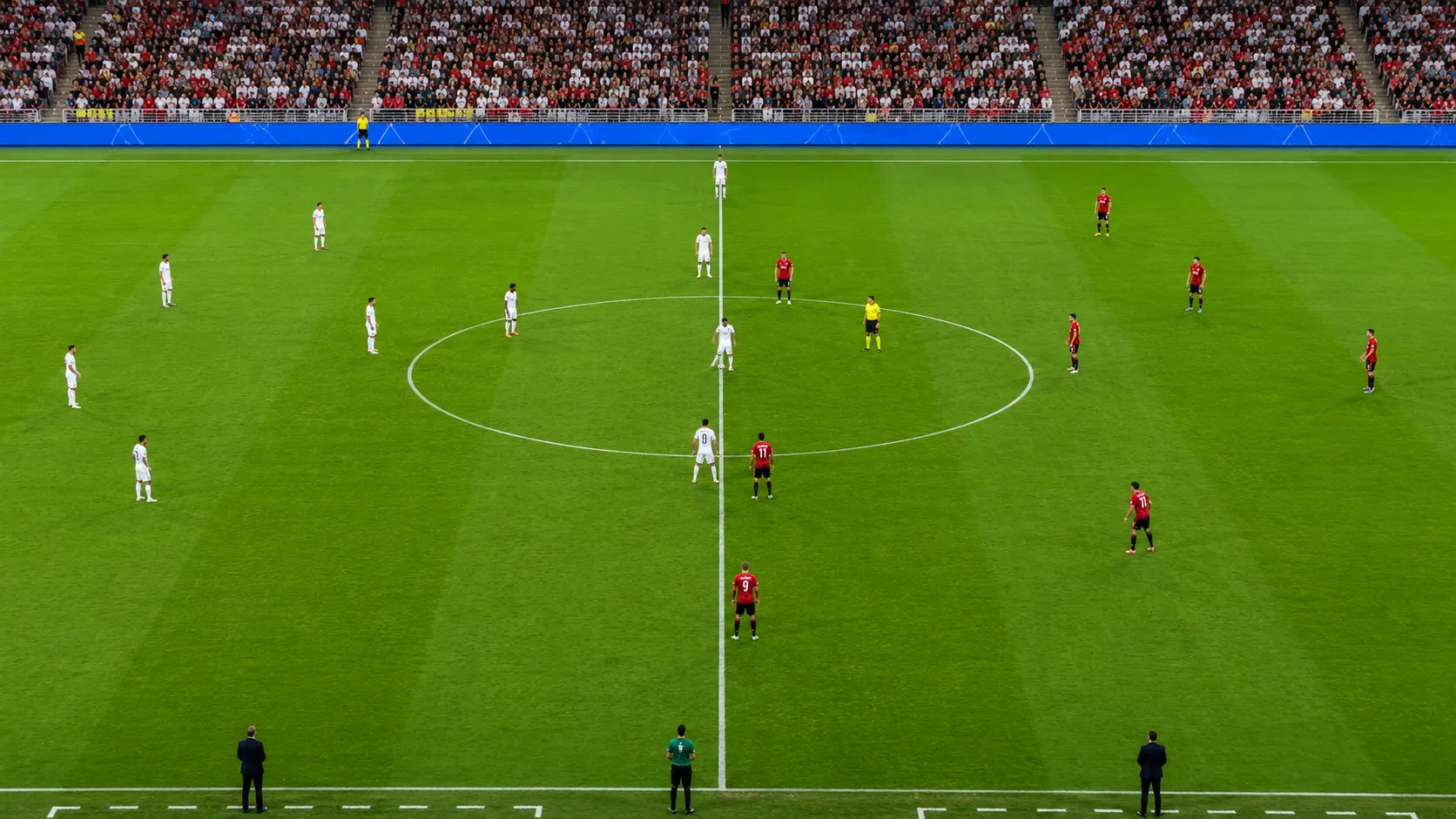
How many soccer players on the field is a simple question, but the complete answer has a few important layers. In a standard outdoor soccer match, each team has 11 players on the field, which means there are usually 22 players total on the field at one time. That count includes 1 goalkeeper and 10 outfield players per team. Under Law 3, a match is played by two teams with a maximum of eleven players, and one of them must be the goalkeeper. A match also may not start or continue if either team has fewer than 7 players.
That direct answer covers the core rule, but it does not explain why people still get confused. Some searchers mean players on the field, while others are really asking about the team roster, the bench, or the number of substitutes allowed. On top of that, youth soccer, futsal, and small-sided games use different player counts, so the “right” answer depends on the format you are watching or playing.
If you only need the quick answer, here it is again: 11 players per team, 22 players total on the field in standard 11v11 association football. The rest of this guide explains why that number matters, when it changes, and how soccer team size, roster size, substitutions, and youth formats fit into the bigger picture.
The Short Answer: 11 Players Per Team, 22 Total on the Field
In standard soccer, a match is played by two teams, and each team can have up to 11 players on the field. That creates the familiar total of 22 players on the field during normal play. The goalkeeper counts as one of those 11 players, so the usual split is 1 goalkeeper plus 10 outfield players.
This is the answer most people want when they search how many players on a soccer field, how many soccer players are on the field, or how many people are on a soccer field at once during a game. In a full-sided outdoor match, the number does not change just because teams use different formations like 4-4-2, 4-3-3, or 3-5-2. Those formations only change how the players are arranged across defense, midfield, and attack. They do not change the total number of players allowed on the pitch.
So, if you are wondering how many players are on the soccer field including the goalie, the answer is still 11 per team. That is one of the most common areas of confusion for beginners, especially when reading articles that talk about field players, outfield players, and goalkeepers separately.
Why People Get Confused About Soccer Player Numbers
A big reason this topic causes confusion is that people use the word team in different ways. Sometimes they mean the 11 players currently on the field. Sometimes they mean the full matchday squad. And sometimes they mean the wider roster a club carries during a season. Those are not the same thing. One of the clearer competitor explanations points out that team size and roster size differ, which is exactly where many readers get lost.
Think of it this way. The starting XI is the group that begins the match. The bench includes players who are available to come on as substitutes. The roster or squad can refer to a larger list of players registered for the season or tournament. In many competitions, clubs may carry 23 players for a matchday environment or operate under a broader 25-player squad structure, but that does not mean all of those players can be on the field at once.
This is why articles about how many players are on a soccer team and articles about how many soccer players on the field can overlap, but they are not asking exactly the same question. The field answer is about active players in the match. The team answer often expands into substitutes, bench roles, and roster rules. If your goal is to answer search intent clearly, that difference has to be explained early.
What the Official Rule Says About the Number of Players
The cleanest rule-based answer comes from Law 3 – The Players. It states that a match is played by two teams, each with a maximum of eleven players, and one must be the goalkeeper. It also says the match may not start or continue if a team has fewer than seven players. That is the official foundation behind the usual answer of 11 players per team and 22 players total on the field.
This matters because it answers two different search questions at once. First, it confirms the standard player count. Second, it explains the minimum number of players needed to continue a soccer match. Many articles mention the total player count, but fewer clearly connect it to the minimum-player rule. That is a useful place to add authority and clarity in an SEO article.
Another important detail is that maximum does not always mean both teams begin with every slot filled. In some real-world cases, a team may start short because of injuries, dismissals carried over from another match, or competition-specific circumstances. But under the rule, once a team drops below 7 players, the match cannot continue. That is one of the most valuable gap explanations because readers often ask whether a team can keep playing with 6 players. Officially, the answer is no.
Rule summary: A standard match allows 11 players per team, requires 1 goalkeeper, and cannot continue if a team has fewer than 7 players.
What Happens After a Red Card or Injury?
This is where the total player count can change during a match. If a player is sent off with a red card, that team continues with one fewer player. So instead of 11 vs 11, the game might become 10 vs 11. If another player is sent off, it could become 9 vs 11. That means the total number of players on the field can absolutely be fewer than 22 once the game is underway.
Injuries can also affect the situation, although the exact outcome depends on whether the injured player can continue and whether the team still meets the minimum-player requirement. The key idea is that 22 players total is the normal starting framework for a standard match, not a number that is guaranteed from kickoff to full time. This is why queries like when are there fewer than 22 players on the field and how many players can be on the field after a red card are natural long-tail extensions of the main keyword.
For beginner readers, the simplest way to explain it is this: soccer starts as an 11v11 game, but send-offs, injuries, and competition rules can reduce one side. The match only remains legal while each team still meets the minimum threshold of 7 players. That is the most important edge case to include because it turns a basic answer into a complete one.
Soccer Positions: How the 11 Players Are Usually Split
Even though the official rule focuses on the number 11, many readers also want to know how those 11 players are divided on the field. The most common setup includes 1 goalkeeper, a group of defenders, a set of midfielders, and one or more forwards. The exact split changes depending on the formation and the coach’s tactics, but the total still stays at eleven.
For example, in a 4-4-2, a team usually plays with 4 defenders, 4 midfielders, and 2 forwards, plus the goalkeeper. In a 4-3-3, the team uses 4 defenders, 3 midfielders, and 3 forwards. In a 3-5-2, the midfield becomes more crowded, often with wing-backs covering large areas of the pitch. These systems shape how the game looks, but they do not change the official player count.
Here is a quick position overview:
| Role | What it means |
| Goalkeeper | Protects the goal and is the only player allowed to handle the ball inside the penalty area under normal play |
| Defenders | Help stop attacks and protect the back line |
| Midfielders | Link defense and attack, control possession, and cover large spaces |
| Forwards | Focus on creating and finishing scoring chances |
This section supports keywords like football positions, soccer positions, defenders, midfielders, forwards, and team formation while still staying tightly connected to the main question. It also helps newer readers understand that the starting XI is not just a number. It is a structure.
Why Soccer Uses 11 Players
A lot of readers eventually ask, why does a soccer team have 11 players in the first place? The short answer is that this format became the accepted standard as the sport was organized under formal rules in the 19th century. Modern football traces its codified rules back to 1863, and over time the 11-a-side structure became the stable model for the game.
There is also a practical reason the number lasted. Eleven players creates a balance between space, fitness, strategy, and specialized roles. It gives teams enough players to build a real tactical shape across defense, midfield, and attack without overcrowding the field. That balance is one reason the format has remained central to association football for over 150 years.
So when someone asks why 11 players on the pitch, the answer is not just “because that is the rule.” It is because the rule survived for generations as the best balance of skill, tactics, and flow for the full-sized game. That kind of historical context makes the article more complete and more useful than a one-line answer.
Youth Soccer Does Not Always Use 11v11
One of the biggest reasons people get mixed answers online is youth soccer. Younger players often do not play the full 11v11 version of the game. Instead, they use small-sided games designed for player development. Competitor content and youth-format references commonly show a progression such as U6-U8: 4v4 or 5v5, U9-U10: 7v7, U11-U12: 9v9, and U13+: 11v11.
That structure exists for a good reason. Smaller games give children more touches on the ball, more chances to make decisions, and more space-relative involvement in the action. In other words, reduced team size supports skill development, technical growth, and better engagement. This is why a parent searching how many players are on the field in youth soccer by age may see answers that look very different from a professional match.
Here is a simple comparison:
| Age group / format | Players per team on field | Total on field |
| U6-U8 | 4 or 5 | 8 or 10 |
| U9-U10 | 7 | 14 |
| U11-U12 | 9 | 18 |
| U13+ | 11 | 22 |
So, if you are asking when do kids start playing 11v11 soccer, the common progression points to U13 and older. Local leagues can still vary, but that age-based transition is a strong general guideline and helps explain why youth articles often mention 7v7, 9v9, and 11v11 in the same discussion.
Other Formats: Futsal, Indoor Soccer, and Beach Soccer
Another reason the main keyword can feel confusing is that people often use the word soccer loosely across different formats. In standard outdoor soccer, the answer is 11 players per team. In futsal, however, each team starts with 1 goalkeeper and 4 outfield players, so there are 5 players per team on the court. FIFA’s futsal explainer is very clear on that point.
Indoor soccer can vary by league, which is why some rule pages mention formats like 6v6 or 5v5. That is different from outdoor 11v11 soccer and different again from formal futsal, even though the terms sometimes get mixed together in casual conversation. This is an important distinction for search intent because a person asking soccer vs futsal number of players needs a format comparison, not just the main outdoor answer.
Beach soccer is another useful comparison. FIFA’s statutes note that beach soccer is played under its own laws, separate from the main Laws of the Game and separate from futsal laws. Even when competitor pages skip beach soccer, including it can strengthen topical authority because it fits the same family of “how many players are on the field” questions.
How Many Substitutes Are Allowed in Soccer?
The number of substitutes allowed in soccer depends on the competition, but the modern game often uses the five-substitution rule in many settings. What matters for this article is that substitutions do not increase the number of players on the field beyond 11 per team. A substitute replaces someone already on the pitch. You do not get an extra player.
This is why readers who ask how many substitutes are allowed in soccer are asking a related but separate question from how many soccer players on the field. Substitution rules affect the bench, the matchday squad, and player rotation, but the active on-field limit still remains the same under the standard rules.
In some formats, like futsal, substitutions can happen on a rolling basis and in greater numbers during the match flow. FIFA’s futsal explainer notes that teams start with five players, but may use additional players through rolling substitutions made without stopping the game. That makes futsal a useful contrast section because it shows how player-count rules and substitution style change together across formats.
Quick Comparison Table: Soccer Formats and Player Counts
If you want the whole topic in one glance, this table does the job:
| Format | Players per team on field | Total on field |
| Standard outdoor soccer | 11 | 22 |
| Youth 9v9 | 9 | 18 |
| Youth 7v7 | 7 | 14 |
| Futsal | 5 | 10 |
| Beach soccer | 5 | 10 |
This kind of format table is especially useful for capturing long-tail searches like football player count by format, soccer player count explained simply, and how many players are on the field in youth soccer. It also gives your article a practical edge over pages that only repeat the standard 11-player answer without context.
FAQ: Common Questions About Soccer Players on the Field
Does the goalkeeper count as one of the 11 players?
Yes. The goalkeeper absolutely counts as one of the 11 players per team. A standard team has 1 goalkeeper and 10 outfield players.
How many players are on a soccer field including both teams?
In a standard full-sided match, there are usually 22 players total on the field, with 11 on each side.
Can a soccer match start with fewer than 11 players?
The official rule says a match is played by teams with a maximum of eleven players and may not start or continue if a team has fewer than 7 players. In practice, competitions can have administrative rules around starting short, but the key official threshold is that a team cannot drop below 7.
Can a soccer match continue with 6 players?
No. Once a team has fewer than 7 players, the match may not continue.
How many players are on the field in youth soccer?
It depends on the age group. Common youth formats include 4v4, 7v7, 9v9, and then 11v11 for older players.
How many players are on the field in futsal?
In futsal, each team starts with 5 players on the court, including 1 goalkeeper and 4 outfield players.
Final Answer
So, how many soccer players on the field are there in a standard match? The clear answer is 22 players total, with 11 players per team. That includes 1 goalkeeper and 10 outfield players on each side. Under the official rule, the match cannot start or continue if a team has fewer than 7 players.
The reason this topic can feel more complicated is that people often mix up players on the field, substitutes, roster size, youth formats, and alternate versions of the game like futsal or indoor soccer. Once you separate those categories, the rule becomes much easier to understand. For standard outdoor soccer, the number is simple: 11 vs 11, 22 total.
Disclaimer: This article is for general informational and educational purposes only. Soccer player counts, substitution rules, roster sizes, and match regulations can vary depending on the competition, league, age group, governing organization, and game format such as futsal, indoor soccer, or youth soccer. Always refer to the official rules and competition guidelines for the specific level of play being discussed.